Moonlight

Getting back on track when you lose your way

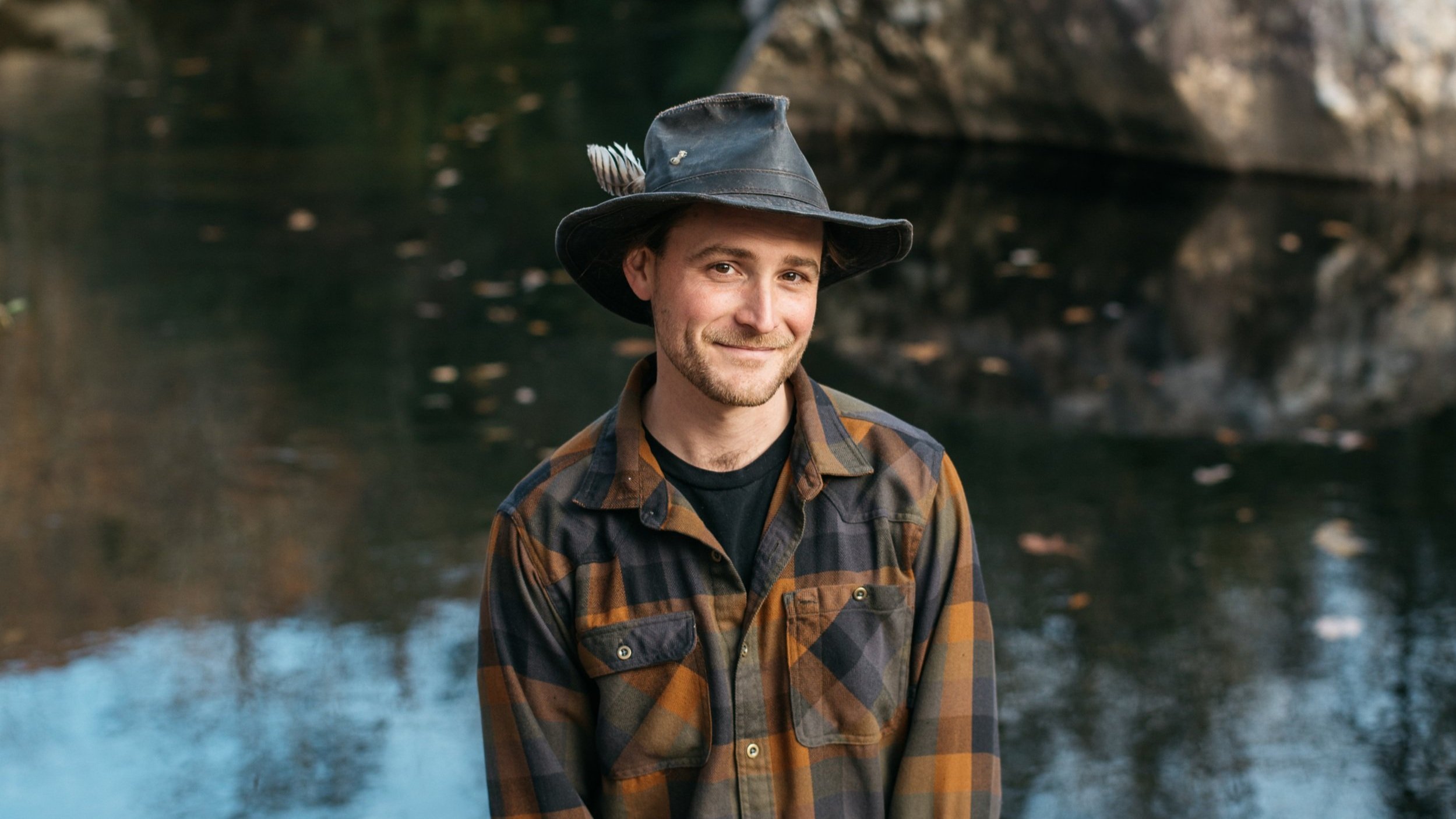
Stepfanie Aguilar camps at Red Rock Canyon State Park (photo courtesy stepfanie aguilar)

 
I learned something meaningful that night in the desert. I learned how important family stories can be, when you’re trying to move through this world.
— Stepfanie Aguilar
 

Season 4 // Episode 2

We’ve all had moments when we feel lost. Sometimes it’s literal — getting lost in the mountains or at sea. Sometimes it’s emotional — where we question our place in life. 

Either way, it’s unnerving. And lonely.

This story takes us from the deserts of California to the jungles of the Philippines, and explores how one young woman got back on track, when she lost her way, both literally and figuratively.

  • Welcome to Out There Podcast. Our stories are written for the ear, so for those able, we recommend listening while reading along. Transcripts may contain minor errors; please check the audio before quoting.

    VOICEOVER: Hub and Spoke audio collective.

    DENIS BULICHENKO: We went on a skiing tour, a back-country ski tour. And the thing was that the weather was unreliable on that day.

    WILLOW BELDEN: This is Denis Bulichenko.

    DENIS: So we went to the summit and started our descent. But at the same time, the clouds arrived, and it was like clear whiteout. We weren’t able to see anything at all. And we were quite lost.

    WILLOW: Lost. In the mountains. In a snowstorm. This is NOT a situation you want to be in.

    But luckily, Denis had a tool at his disposal. An app that he’d developed. It’s called PeakVisor, and it helps you navigate in the backcountry. And in this case, it was a lifesaver.

    DENIS: Using 3-D map and the terrain visualization, we were able to track back our steps and to find a safe descent to the valley.

    WILLOW: PeakVisor is our presenting sponsor this season. Check out their app in the app store. You just might love it.

    Hi, I’m Willow Belden, and you’re listening to Out There, the podcast that explores big questions through intimate stories outdoors.

    This season, we’re exploring the theme “Secrets of the Earth.” Each episode, we’re harnessing the power of nature to uncover new truths and help us understand our own humanity.

    Today’s story is about losing your way.

    We’ve all had moments when we feel lost. Sometimes, it’s literal — getting lost in the mountains, or at sea. Sometimes, it’s emotional — when we question our place in life.

    Either way, it’s unnerving. And lonely.

    On this episode, Stepfanie Aguilar takes us from the deserts of California to the jungles of the Philippines, and explores how you get back on track, when you lose your way, both literally and figuratively.

    STEPFANIE AGUILAR: I was at the top of this ridge. And I was by myself. The wind was so strong that I thought it would knock me off the cliff. I kept saying to myself, “Don’t look down, don’t look down.”

    Because I’m really scared of heights.

    But let’s back up.

    At the time, I was in my mid twenties, and I was going through a quarter-life crisis. I didn’t know what kind of work I should do, I was under a lot of debt, and I wasn’t sure what I was passionate about. It was an unfulfilled life.

    I was carrying a lot of shame and disappointment because I couldn’t get myself together. I was getting more and more insecure about myself. It was a downward spiral.

    The one thing that helped was getting outdoors. I found myself drifting into the mountains, forests, and deserts. Away from where people crowded. In places where I didn’t have to perform.

    There was one year when I kept my camping gear in the trunk of my car all the time, because I was camping so much.

    Camping and hiking was therapeutic. Hiking was embodied meditation, reflection, and knowledge-seeking. It also seemed to symbolize the obstacles in my life. Like struggling and wanting to turn back. Measuring to see if I can push myself a little further to pull it off.

    But one day, that therapeutic practice became something else. Something unexpected. Something frightening.

    STEPFANIE (field recording): Packing for an overnight camping trip, and I’m missing a flashlight.

    STEPFANIE (narration): My destination was Red Rock Canyon State Park. It’s in the desert, an hour away from where I live in southern California.

    It was one of those weeks where I felt mentally drained, and I just needed a quick getaway. So at the last minute, I packed up the rest of my camping gear and hit the road.

    When I got to the campground in the afternoon, I was amazed. I hadn’t expected it to be this beautiful. I pitched my tent at the foot of these dramatic cliffs.

    STEPFANIE (field recording): It’s like I’m gonna camp in between some giant’s toes.

    STEPFANIE (narration): After setting up my tent, I decided to go for a sunset hike. I wanted to stretch my legs before making dinner and take pictures of plants during golden hour. Taking pictures was another meditative activity for me.

    I looked at my map. There was a short nature trail nearby. It’s just what I needed: gentle and easy.

    STEPFANIE (field recording): I’m all packed for my little hike. Let’s see what this trail is all about.

    STEPFANIE (narration): As I hiked, I photographed Cholla cacti, the ones that look like prickly teddy bears. There were Joshua trees. Yucca plants. And it was a very clear sky. Even the moon was already out.

    The sandy trail led me up to a viewpoint high above the campground. And the view. Ah, the view was spectacular.

    From the top, I saw a panorama of hoodoos, these tall, thin rock formations that remind me of chess pieces. I saw shallow caves in the cliffs across from where I stood.

    I had planned to turn back at this point. But I was so curious about this place. It looked mystical. It was also my first time here, and I only had this one night. I wanted to keep exploring.

    Judging from the map, it looked like there was a trail that would take me down into the canyon in front of me. I could then pick up another trail and loop back to the campground. Easy.

    I decided to try it.

    But it didn’t take long for me to wonder if this was a good idea. First of all, the trail was very exposed. And remember, I have a fear of heights.

    STEPFANIE (field recording): Okay. (laughs nervously) It's so high.

    STEPFANIE (narration): Secondly, the terrain was rough. This wasn’t an easy nature trail anymore. It was steep, slippery, and rocky. And I wasn’t prepared.

    STEPFANIE (field recording): This is the first time I brought my running shoes, which isn't really for hiking. I didn't bring my hiking boots.

    STEPFANIE (narration): But I figured that once I got down to the bottom, it would be okay. It would be worth it. So I took a deep breath and scrambled down, clinging to rocks and loose dirt. I kept slipping. The wind kept trying to blow me off course. But then I finally made it to the bottom.

    The trail wasn’t very clear down here. But I saw footprints and even some tire tracks. So I followed them.

    By now, the sun had gone down, and it was twilight. I could still see, but I knew it would be dark soon.

    I felt a twinge of fear in my gut saying maybe I should turn back. But my fear often plays tricks on me. It tells me not to do things, even when they’re perfectly safe. So I tried to ignore it. I told myself to focus on the beauty around me and stop worrying.

    After a while, I came to a group of Joshua Trees clumped together, and it reminded me of a typical family portrait. It felt like they were saying, “Welcome to this side of the canyon.”

    See? There was nothing to be scared of.

    The canyon was gorgeous in the soft evening light. Looking around, I could see the contours and silhouettes of plants and the hoodoos against the canyon walls and all of the beautiful rock formations.

    I kept walking and walking, and the stars came out.

    But eventually, the fear came creeping back into my mind. My gut tugged at me like it was saying, “Hey, you sure you wanna keep going?”

    Again, I tried to ignore it but it lingered.

    STEPFANIE (field recording): Oh my gosh. I'm still walking. What the heck?

    STEPFANIE (narration): I took out my phone and opened up Google Maps. I didn’t have reception in the canyon, but I had downloaded a map of the area ahead of time. It’s a precaution I often take, when I go hiking somewhere new. I looked at the little blue dot on the map, showing me where I was. It looked like I was more than halfway back to the campsite. OK. I can do this. I kept walking.

    But then, the path began to get steep. And the opposing cliffs got closer to each other. And then they joined together like two hands intertwining their fingers. It was a dead end.

    I reached out and attempted to climb the rock, but it felt too dangerous. I didn’t know how to rock climb.

    I checked my map and compared it to Google Maps. And that’s when I realized that I wasn’t where I thought I was. And not only that — I was sort of trapped.

    As panic started to set in, I also felt myself disconnect from my body. Like a scene from a thriller movie, where I’m the audience, and I’m watching this character struggle at the bottom of this tiny canyon.

    And then, thoughts started crowding my mind: This can’t be happening. I should’ve listened to my gut. Why did I think it was okay to go on this hike alone when it was getting dark? What if there’s a creepy person following me? What if I don’t make it back to the campground tonight?

    I felt so alone.

    This hike was supposed to be short and easy. But I had already been out for two hours. And it was anything but easy.

    The fear in my gut intensified.

    WILLOW: Hey, it’s Willow. We’ll hear the rest of the story in a moment. But first — if you’ve ever faced an unexpected night in the backcountry, you probably spent some time worrying about how you were going to stay warm. So I want to tell you about our sponsor, Rumpl.

    Rumpl is on a mission to introduce the world to better blankets. Their Original Puffy Blanket is designed for adventure, and built with the same technical materials you find in your favorite outdoor gear. Rumpl blankets are durable, water and stain resistant, ultra-packable and super warm.

    They’re perfect for keeping cozy around the campfire, layering up in your tent, or - perhaps - tucking into your day pack, just in case.

    Shop their line of over 140 prints and designs at rumpl.com/outthere and use the code OUTTHERE for 10% off your first order. That’s 10% off your first order when you head to rumpl.com/outthere and use code OUTTHERE at checkout.

    And now, back to the story.

    STEPFANIE: By now, it was completely dark. And since I was at this dead end, I had no choice but to turn back. I hoped I’d be able to retrace my steps and get back the way I came.

    I dug out my headlamp, but it didn’t do much to help me orient myself. If anything, it made me more scared. Illogical fears started crowding into my brain. Like in those horror films where a monster could pop out of nowhere.

    I was starting to get paranoid.

    In the distance, I heard yelping. Maybe a pack of coyotes. A few minutes later, I heard a noise, like something scuttling in front of me. Could it be a lizard? A mouse? A snake?

    I shone my headlamp on the canyon floor, trying to see my footsteps so I could follow them back. But I couldn’t see them. It was like the sand had swallowed up any trace of where I’d come from.

    I squinted my eyes, trying to read the cliffs and search for clues. But their shapes looked too similar.

    I walked and walked, but I kept hitting dead ends. I was starting to get tired.

    I checked Google Maps for hints but it wasn’t much help.

    As I walked, I started talking. Out loud. I talked to the ground, the animals I couldn’t see, the cliffs, the moon. I asked everything around me, “Could you help me find my way? Please?”

    Of course, I wasn’t expecting any of them to actually say something. But I didn’t know what else to do. I just had to tap into my spirituality, to keep me grounded in some way.

    It helped a little. But only for a moment or two. Then the panic would set in again.

    Finally, I sat on a rock to take a break. I was so nervous I couldn’t think straight. All I knew was that I really didn’t want to spend the night in this canyon.

    And then, I happened to look up at the moon. It was full. It laid a blanket of soft light over the canyon, just barely enough to see shadows.

    As I sat there, gazing at the moon, a memory drifted into my mind. Or rather, a story my mother had told me.

    A story from her childhood.

    JENNIFER AGUILAR (montage): The moonlight. The moonlight. Moonlight. Guided by the moonlight.

    STEPFANIE: My mom grew up in the Philippines. And when she was nine years old, her mother — my grandmother — was offered a job, far away from home.

    JENNIFER: And she has to take it even if it's so far from us. Even if it means she has to be separated from us, from her kids and her husband. She needed to get the job because she has to help support the family.

    STEPFANIE: My grandmother — Lola — left with their two babies to work in the mountains while my grandfather — Lolo — stayed behind and took care of the older kids, including my mom. By the way, Lola means grandmother in Tagalog and Lolo means grandfather.

    Every few months, Lolo would travel with the kids to visit Lola and the babies. And the trip they made — it’s something my mom remembers so vividly. Because it was really hard.

    JENNIFER: We have to get up early, like 4 a.m., because we need to take the bus.

    STEPFANIE: This wasn’t a simple trip. The bus would take hours to reach the coast, where they would wait for a bangka, which was a dugout canoe.

    JENNIFER: We stay in the boat for at least four to five hours.

    STEPFANIE: At the time, my mom didn't know how to swim. There were no life vests either.

    JENNIFER: You have to keep still while you are sitting down because they will get mad at you. You might outbalance the bangka, and you might fall and capsize.

    STEPFANIE: Capsizing was a very real risk. And it was extra scary because my mom’s imagination ran wild.

    JENNIFER: I was looking for ghosts or something scary because it was so dark at night.

    STEPFANIE: After the boat ride, they had to walk for six or seven hours. Alone. Through the jungle.

    JENNIFER: It was hard for me and for my two brothers, who are still small, to walk in a very dark, dark place. We didn't even have a flashlight. Only the moonlight.

    My father is an expert of navigating even if there is no trail. I sometimes see him looking at the vegetations, the trees, the forms of the mountains, the forms of the hills.

    STEPFANIE: They walked on fallen trees, branches, and bamboo with only rubber slippers on.

    JENNIFER: We pass by the swamp, where our legs are buried. Sometimes it's knee deep, sometimes it's waist deep. So my father has to pull us out from the mud. Sometimes, my father would tell me, “Step on my footsteps, after me.” So that's what I did, because it means that, when he steps on it, it's already safe.

    STEPFANIE: So, reality check. This was in the 1960s, in the rural Philippines. My mom and Lolo were doing all this without any outdoor gear. No hiking shoes. No compass. No map.

    JENNIFER: We only packed two sets of clothes. We don't have food or snacks to pack up.

    STEPFANIE: What about water?

    JENNIFER: No.

    STEPFANIE: How did you, how did you–

    JENNIFER: We don't have bottled water before.

    STEPFANIE: How did you drink water?

    JENNIFER: We didn't, we did not until we reached the house.

    STEPFANIE: You mean it would take a whole day?

    JENNIFER: Yeah. Yeah. So…

    STEPFANIE: Did anyone cry at any point?

    JENNIFER: No. We cannot even complain.

    STEPFANIE: My mom had shared this story with me a handful of times. But until now, I had never connected with it very strongly. Her stories were like photos in a dusty old album. They felt so distant.

    But now? Lost and alone in the desert, the story felt much more relatable. The fears my mom had felt, as a 9-year-old hiking through the jungle at night? They weren’t that different than the fears I was feeling. Navigating in the dark wasn’t easy for her and Lolo either.

    As I thought about everything she had been through, my own situation started to feel less dire. I had more than enough to survive a night. I carried plenty of water and snacks. I had a jacket for extra warmth. Worst-case scenario, I’d have to sleep outside without a tent. Which is not life-threatening. It would just be uncomfortable. An inconvenience.

    At that moment, I felt a bit ashamed. Not just about me getting lost in the desert. I felt shame in my quarter-life crisis.

    Even though I was jobless, I had somewhere to go. My parents welcomed me home. I was still on their health insurance. I had my own car. Having a job was important, but I didn’t need to figure out all my career or life goals right away.

    As I sat at the bottom of the canyon in the moonlight, thinking all these things, I felt myself softening. It was still dark, and I still didn’t know how to get back to the campground. But I wasn’t so scared anymore. And my heart had calmed.

    Finally, I could think and see more clearly. And once my mind was clearer, I realized I could handle this. I had the skills to find a way out of this mess.

    I thought back to my mom’s story. Lolo was able to figure out the way without a map or a compass. He just needed to read his surroundings using the moonlight, his memory, and his own knowledge.

    I felt that if he could do it, I could somehow pull this off. And I began to trust that I was going to be alright.

    I took a deep breath, closed my eyes, and retraced my steps in my mind, scanning my memory.

    Then I remembered seeing the family portrait of Joshua Trees. If I could locate them, then I’d be able to find that one trail that first connected me to the bottom of this canyon.

    It wasn’t easy. There were so many Joshua trees. I encountered more dead ends. But I could feel that I was getting closer. That’s what my gut was telling me.

    And then finally, I found them. The family of Joshua trees. A crowded bunch in the blue shadow. From there, I found the trail and…

    STEPFANIE (field recording): I made it to the top. Wow.

    STEPFANIE (narration): I was back at the viewpoint, where I could see the nature trail.

    STEPFANIE (field recording): Okay. Now it's time to go to my campsite.

    STEPFANIE (narration): I made it back to the campground just fine. There were no animal attacks. No injuries. No need to sleep outside without a tent.

    Remembering my mom’s story had calmed me down enough that I was able to think clearly and find my way.

    But more importantly, I learned something meaningful that night in the desert. I learned how important family stories can be, when you’re trying to move through this world.

    Since that trip, I’ve turned to my mother’s stories over and over again. Stories like why we migrated to another country, stories about eating and sharing what little food was available, and how it was hard to find a job in the Philippines.

    These stories are humbling. And I’ve come to learn that they offer me solace in my own life. When we go through tough times, it’s easy to get overwhelmed. And remembering that my family members went through their own hardships and were able to navigate them, it makes everything less daunting.

    Whatever I’m facing, if I tap into their stories — their memories — I stop feeling so alone. And often, that’s all you need to find your way in the world.

    WILLOW: That was Stepfanie Aguilar. She’s an audio maker living in California. She’s also a recipient of the Whicker Awards, which support emerging documentary makers throughout the world. You can see more of her work at www.stepfaniea.com, and I have a link to that at our website as well.

    Music in this story included works from Marc Merza and Blue Dot Sessions.

    Coming up next time on Out There, Carolyn McDonald was struggling. Big time.

    CAROLYN MCDONALD: That was just one of those melt-down days. It was a melt-down morning. And I just, at my dining room table, I just like OK, ok. And I stopped, and I said, “Just go to the beach.”

    WILLOW: Tune in on May 18 for a story about rekindling hope, when the tide is at its lowest.

    One thing you can do to support Out There is leave a review on Apple Podcasts, or wherever you’re listening right now. We’re always eager for new listeners, and your recommendation is our best form of advertising. If you’ve already left us a review, thank you so much.

    Out There is a proud member of a podcast collective called Hub & Spoke.

    One of the other shows in the collective is called Print is Dead. (Long Live Print!). It’s a podcast about magazines and the people who make (or made) them. You can find Print is Dead. (Long Live Print!) wherever you get your podcasts, or at longliveprint.co.

    I’d like to give a big thank you to our presenting sponsor, PeakVisor.

    PeakVisor is an app that helps you make the most of your time in the mountains. It’s got intricate 3D maps and other features that help with trip planning and route finding. And they have a peak identification feature, to help you figure out what mountains you’re looking at, when you’re out on adventures.

    If you’d like your own personal mountain guide, check out PeakVisor in the app store. You just might love it.

    Today’s story was written and narrated by Stefpanie Aguilar. Script editing and sound design by me, Willow Belden.

    Out There’s advertising manager is Jessica Taylor. Our audience growth director is Sheeba Joseph. Our ambassadors are Tiffany Duong, Ashley White, and Stacia Bennet. And our theme music was written by Jared Arnold.

    We’ll see you in two weeks. And in the meantime, have a beautiful day, be bold, go outside, and find your dreams.


Credits

Story by Stepfanie Aguilar

Script editing and sound design by Willow Belden

Music includes works from Marc Merza and Blue Dot Sessions

Links

Support Out There on Patreon


Sponsors


PeakVisor

Rumpl

Use promo code “OUTTHERE” to get 10% off your first purchase at rumpl.com/outthere


Living Without Hope

What if the problem you’re facing can’t be fixed?

Jacob ERickson (photo courtesy Jacob Erickson)

 
Going outside is my church. ... Backpacking is my devotion.
— Jacob Erickson
 

Season 4 // Episode 1

When someone is diagnosed with a terminal illness, there’s often a flood of difficult emotions. Grief. Depression. Learning to live without hope.

But more and more, people are experiencing that kind of anguish even when they’re perfectly healthy.

In this episode, we bring you the story of a young man named Jacob Erickson, who almost died from climate anxiety — before a pivotal moment in nature rekindled his will to live.

  • Welcome to Out There Podcast. Our stories are written for the ear, so for those able, we recommend listening while reading along. Transcripts may contain minor errors; please check the audio before quoting.

    VOICEOVER: Hub and Spoke audio collective.

    WILLOW BELDEN: Hi, I’m Willow Belden, and you’re listening to Out There, the podcast that explores big questions through intimate stories outdoors.

    This season, we’re exploring the theme “Secrets of the Earth.” Each episode, we’re harnessing the power of nature to uncover new truths and help us understand our own humanity.

    But before we get to that, I want to introduce you to someone.

    DENIS BULICHENKO: My name is Denis Bulichenko. And everything started in 2015 when I moved to Italy. And I moved from a relatively flat area, well, so the mountains were like really, really exciting thing for me. And I started to go hiking really, really often.

    And also, I have a daughter. She was small back then. But she also was kind of really curious, asking me all the time, “What’s the name of that mountain?”

    WILLOW: I think a lot of us have been in this situation. You’re out in the mountains. You see a peak off in the distance, it looks tantalizing. But you can’t figure out what it is.

    So, what do you do?

    Well, if you’re Denis, you create a new app.

    The app he made is called PeakVisor, and they are the presenting sponsor for this season of Out There. PeakVisor is on a mission to help you make the most of your time in the mountains.

    Check it out in the app store. You just might love it.

    Jacob Erickson is a wilderness guide in western North Carolina. He takes people out in nature to do healing work — dealing with grief and that sort of thing. It’s a process he’s been going through himself for years.

    Jacob’s been facing up to his own mortality since he was around 16. But the life-threatening situation he's reckoning isn't what you might think. He hasn't been diagnosed with cancer. He's not suffering from organ failure. He’s actually not sick with anything.

    I'm going to let Heather Kitching pick up the story from here.

    And trigger warning: This story discusses depression and suicidal ideation.

    HEATHER KITCHING: To be honest, Jacob didn’t really didn't grow up around nature. He’s originally from Phoenix. It's like a concrete jungle built on a desert. And the small strip of lawn in his yard? Well, “lawn” was a generous word for it. It was more like a patch of dried up grass and dirt. He wasn’t even allowed to touch the bushes near the street because they were oleander. They were toxic.

    Jacob was what you might call a sensitive kid, highly attuned to the world around him. He was like a sponge for information.

    JACOB ERICKSON: I remember being like present watching the 2000 election between Bush and Al Gore, and asking my parents, “Why didn't Al Gore win? Because he won the popular vote.” And then they're like, “Jacob, you're like, seven. This is too big of a question for you.”

    HEATHER: Notwithstanding Jacob’s rather unusual fascination with grown-up topics, he had a pretty typical childhood in a lot of ways. He had a sandbox in his yard. Got into video games and space aliens. Played on a soccer team for a while.

    For Jacob, the first clue that something was wrong came when he was eight.

    JACOB: I remember my dad waking me up in the morning, and he tells me, “Jacob, this is a day that will change your life for the rest of your life.

    And I just was like, 'Oh my gosh, mom's dead.'

    And I asked him, like, “Is mom dead?”

    And he was like, “No, someone flew a plane into the Twin Towers.”

    And I was like, “Where's the Twin Towers?” I had, like, no idea.

    And he's like, “It's New York City.”

    And I was just like, “Where's New York City?” Like it was just totally beyond my eight year old brain.

    HEATHER: Jacob gets out of bed. Goes into the living room.

    His mom and two sisters are watching TV. He starts watching with them.

    And he sees those images that we've all seen a million times now. The north tower with a giant gash near the top. Smoke billowing into the air.

    JACOB: I do remember this sense of like a shock wave hitting me, mixed with the feeling like the floor just dropped out underneath you. It was just like this sense of, that things aren't really safe.

    HEATHER: This is the day that Jacob starts to notice symptoms of a disease that's not in his body, but in society. In his case, though, that disease will just about kill him, before he discovers what you might call “a natural remedy.”

    After 9/11, Jacob wants to learn more about this “sickness” he perceives in the world. He watches Mississippi Burning. Reads about the civil rights movement.

    And when he's 15, he goes to this leadership camp. It teaches young people about things like race riots, genocide against Indigenous peoples, the holocaust, Rwanda and Darfur.

    He says it gives him a language for what ails the world – a diagnosis. Several actually: colonialism, xenophobia, white supremacy, antisemitism.

    And it motivates him to start fighting them. He joins his high school social justice club. Gets involved in activism.

    And then something happens that makes Jacob realize that the sickness is even worse than he imagined. He goes to Australia on this student ambassador program called “People to People.” He gets a chance to go snorkeling on the Great Barrier Reef. And what he sees shocks him.

    JACOB: It's a graveyard. Everything's bleached.

    HEATHER: There's nothing but miles and miles of pale white coral against a blue ocean. He sees, like, ONE fish — a big flat thing about four feet long. And a couple of sea cucumbers. And that's it.

    JACOB: I mean, I was expecting a gorgeous mosaic of, like, Finding Nemo. Like, I thought I was gonna see like clownfish and starfish. And what I got was like, Hades underworld.

    HEATHER: Jacob is totally taken aback by this.

    JACOB: I was feeling like a pit in my stomach. I was feeling a certain amount of emptiness. This desire for you know, this underwater magical garden to be a mosaic of Van Gogh's paintbrush. And to see it dying and dead was a wake up call.

    HEATHER: Jacob decides that he needs to take on another battle: saving the planet. What he doesn’t realize is that, on some level, the planet is also going to save him.

    So, I should mention here: Jacob is a voracious reader. When I ask him questions, oftentimes his first instinct is often to quote a favorite author or cite an idea he read in a book somewhere. It can take a minute to get past that, to hear his feelings in his own words.

    And when he gets back from Australia, he starts to read like crazy. Stuff about climate change and sustainability. Starting with the novel Ishmael by Daniel Quinn. You might’ve heard of it. It’s a work of fiction, but the message is that our current lifestyle is unsustainable.

    Jacob says this is the point where he starts to slide into depression.

    JACOB: Fear mind took over, where I was like, ‘Oh my god. Collapse is gonna happen. Like I need to get the hell out of the desert, and I need to get my family out of the desert too because, good God, like we're gonna run out of water.’

    HEATHER: Jacob starts reading non-fiction books in a similar genre. Things like Endgame by Derrick Jensen and Collapse by Jared Diamond. Books that argue that humanity might be headed for a massive die-off.

    When he gets to university, he starts looking up climate science in academic journals. He grows concerned that climate change could cross a threshold where feedback loops feed into each other and collapse the entire ecosystem, killing us all in the process. Or that the fall-outs from climate change, like food shortages and mass migration, could lead to social unrest and war, as humans destroy each other trying to compete for scarce resources.

    And remember, Jacob lives in Arizona. He goes jogging on a dried up river bed. It's not hard for him to believe that life as we know it is on its last legs.

    He says he started to become like Chicken Little, telling anyone who would listen that the sky was falling.

    JACOB: I don't know how my mom and my sisters did it. But I would bring all this stuff to the dinner table. And I'd just be like, “Look at this, like, look at these statistics, like 300 species go extinct, like every week.”

    And they're like, “Oh, wow, you're, you're like in a little too deep, Jacob. Like maybe you should, like, pull out,”

    And I was like, “Are you kidding me? This is like, we all need to learn this.”

    HEATHER: So, it’s possible you’re thinking it all sounds a bit extreme. But I think it's important to point out here that what Jacob fears is not out of the realm of possibility.

    Just lately, scientists have been calling for more discussion about this.

    The Centre for the Study of Existential Risk at Cambridge University published a paper last summer in the Proceedings of the National Academy of Sciences saying we need more research on a possible climate endgame.

    Dr. Kristie Ebi is a coauthor of that paper. She's a professor at the Center for Health and the Global Environment at the University of Washington.

    KRISTIE EBI: There is a possibility of a climate catastrophe.

    HEATHER: According to Ebi and her coauthors, we could cross thresholds this century that led to mass extinction events in the past. They say climate change could trigger other catastrophes, like international conflict, or exacerbate the spread of infectious diseases. Or trigger system failures that unravel societies.

    And that could all happen at even moderate levels of warming.

    Jacob is not the only person who is consumed by fear over this. A study in The Lancet that found that 59 per cent of young people worldwide were either very or extremely worried about climate change. And 45 per cent of them said it’s affecting their daily life and functioning.

    It was Dr. Derrick Sebree Jr. who told me about that study. He’s a core faculty member and the master's program director at the Michigan School of Psychology. He’s registered with the Climate Psychology Alliance as a climate-aware therapist. And he says climate grief can cause people to give up on life.

    DERRICK SEBREE JR: I mean, it's a form of fatalism. Like, the idea of like, ‘Why would I go to university? The university I want to go to is in a place like California, where they might not be here, by then. So why would I even try to go there?’

    HEATHER: You can see these fears reflected on online forums, too. There’s a massive community on Reddit for people who are concerned about social and ecological collapse. It’s the kind of place where people post questions like, “Should I even bother saving for retirement.”

    Nearly half a million people take part in these forums.

    And Jacob was just like them. He had started asking himself, “What was the point in even living if everyone was just going to die?”

    JACOB: I kept thinking, ‘Am I going to bear witness to this? Am I going to watch the cascade of climate change, you know, like, extinguish millions of species and people?’

    HEATHER: At this point, Jacob is sympathizing with climate radicals. His friend Quincy, who's Black, starts calling him the white Malcolm X. He draws a picture in his journal of a polar bear with a rocket propelled grenade blowing up a gas pump. He's become cynical of the climate movement. He thinks the game’s already over.

    JACOB: I was like, ‘Oh, my God, there's no saving this. Like, I can't save anything. None of this.’ Yeah, like, that was rock bottom.

    HEATHER: Flash forward to July of 2013. Jacob's back in Phoenix for the summer after his first year of university in Flagstaff. He's staying with his sister in the family home they grew up in.

    He's by himself one night. Sitting on the sofa.

    He's got a bottle of Sailor Jerry rum in his hand. And his mind is filled with images of death and destruction.

    JACOB: I mean, birds falling out of the sky, putrefied rivers, and seeing you know, trans women's skulls bashed in. I'm seeing Black boys murdered. I'm seeing like exploded bombs and just like nuclear war. Like it was just like a cascade of imagery of just like the bleak darkness of, you know, reality, honestly.

    And I'm just like, 'Man, this is so bad.'

    And I was just, yeah, trying to wash the images away, drink by drink. And it would hold for like five seconds, and then I would take another drink.

    And the images came back worse and worse and worse.

    And for whatever reason, I don't know how, my 38 revolver was on the table. And I remember the way the lamp light was reflected off the end of the barrel. And it was a matte black revolver, snub nose revolver, and I'm looking at the end of the barrel, and there's this glint of light. And I just remember thinking, 'That's my out. This is how I get rid of these screams.’

    And I think I remember, like, 'Might as well just finish the bottle first.'

    And I remember having the bottle on one hand and the gun and the other hand, holding it, and I remember taking a swig from the bottle, and then everything kind of fades to black.

    WILLOW: Hey, it’s Willow. We’ll hear the rest of the story in a moment. But first: Out There is supported in part by Rumpl.

    Rumpl is introducing the world to better blankets with their full line of durable, premium, ultra-warm outdoor blankets and gear.

    Rumpl blankets are a great way to stay comfortable and warm on any adventure. Whether you’re traveling across the country or picnicking at your local park, Rumpl has you covered — literally.

    And since we’re on the topic of climate change today — let me say right away, that Rumpl is a certified b-corp, climate neutral company. They are also a 1% For The Planet partner, which means they donate 1% of their sales to helping protect the environment.

    You can shop their line of over 140 prints and designs at rumpl.com/outthere and use code OUTTHERE for 10% off your first order.

    That’s 10% off your first order when you head to rumpl.com/outthere and use code OUTTHERE at checkout.

    And now, back to the story.

    HEATHER: Jacob regains consciousness behind the wheel of his car. He’s alarmed to discover that he’s essentially been driving while blacked out.

    He knows he's got a problem, but the wait-list for counseling at his college is like months long.

    So for two months, he kind of goes through the motions, trudging through life in this really dark space.

    And then, one day, something unexpected happens. Something that brings about a lasting change for Jacob.

    He wakes up in the morning. The sun is coming through the window. Room is bright.

    But it's still all darkness and gloom inside his head.

    But his dog, Jack, needs to go outside so Jacob takes him out for a walk.

    JACOB: It's a cool day. It's like a nice 75-degree sunny day. Slight breeze in the air.

    HEATHER: They walk through the neighborhood and then up a hill.

    JACOB: And it's this mesa, where it's flat on top. And I just go to go sit with my back up to a ponderosa pine, and I can smell their butterscotch vanilla aroma, and I can feel the sun on my skin and the warmth.

    And I just feel like the well and that pressure of coming up from my lungs, coming up from my chest, into my throat, feeling that, like, throat quiver of tears.

    And like I'm on my knees weeping.

    And it was the weirdest thing, of, like, this sense and feeling of serenity, this sense and feeling that, like, everything is going to be okay. Like, it’s like I was being held. And my grief started to disappear, it started to loosen its grip. And I just felt like everything was going to be okay. That the earth that I loved so deeply was going to be alright.

    HEATHER: So, just to be clear, it's not that Jacob suddenly concluded that climate change isn't happening, or that violence and inequality aren't serious problems. That's not what he meant by the earth being all right.

    It was more that he saw himself as part of a much larger picture, in which life and death are part of a natural cycle. He is going to die. But his body will nourish new life, by becoming food for bacteria and insects, who will in turn feed other animals and plants.

    And this whole cycle — all of humanity — is just a blip in the earth’s history. And the earth itself is just a blip in a much larger universe.

    JACOB: When I reach out and go big, it's not as existential of a crisis as I once interpreted it to be. Scientists have discovered, like, 100 million galaxies, and inside each galaxy is another 100 billion stars. And around each star is an untold number of planets. And then here we are, and our one planet and our one star. And that smallness in the grand scheme of the universe, is quite helpful.

    HEATHER: Jacob spends the day kind of basking in the afterglow of this moment.

    And then the next morning, a part of him is like, “Did that even happen? Was that even real?”

    Call it what you want, but it changes Jacob’s life completely.

    He goes out and buys a backpack, starts spending all his free time outdoors. He's backpacking or mountain biking every weekend and every spare moment he can get.

    But he says it's not like he just stops being depressed. He just stops running from it. He turns toward it. And he lets nature comfort him.

    He says he probably still wakes up with a dark cloud over his head between four and six days a week. But the first thing he'll do is go outside and listen for the birds singing.

    JACOB: I often tell people now that, like, going outside is my church. Like, going outside backpacking is my like devotion.

    HEATHER: As time goes on, Jacob’s focus starts to shift — away from death, to questions of how he wants to LIVE, for whatever time we have left on this planet. Because he’s still not convinced that he has that long.

    He’s basically going through a process like one that Dr. Sebree described to me. A process of learning to live without hope.

    SEBREE: If you knew that tomorrow isn't promised to you, would you still go to work? Like, what would you do with that day knowing that, you know, tomorrow might be the last?

    HEATHER: For Jacob, finding the answer to that question means going to grad school. Studying sustainable communities. Even going on a vision fast.

    And he eventually becomes a full-time wilderness guide.

    Two years ago he and his partner finally left the desert of Arizona, for a place with an abundance of water: North Carolina. They set up a company with some friends that takes people out on the land to do healing work. And they call it Remembering Earth.

    A couple years back, Jacob was guiding a day hike in the Smoky mountains for a young guy in his 20s. Suddenly, out of the blue, this guy asked Jacob: “If you knew you only had a year to live, how would you live your life?”

    JACOB: I just chuckled to myself. I just laughed. Because it was a question that I, in one way or another, ask myself most days I wake up: ‘Is this my last day on earth?’ Or I would just tell myself today was my last day. And how would I live that day?

    HEATHER: So how does Jacob answer the question now? Last year he told a version of his story to the Collapse Support forum on Reddit. That’s the forum I mentioned earlier. It’s for people who are struggling with climate anxiety.

    This is part of what he wrote - quote: “If I only had one year, I would still float rivers, hunt, garden, play music, write poetry, wrap my arms around my lover, laugh with friends and family, but most of all I would want to be rekindling the fire of life within others.” End quote.

    JACOB: I have such a vivacious desire to live. And like, know that when I do die, oh my gosh, I'm gonna just be so sad to leave this place. Because even with all the horrors happening, I know it will be difficult and you know, it's like I know I will lose everything that I love.

    And it's a price that I'm willing to pay again and again and again. To steep myself in the beauty with other people, no matter how dark and bleak it is.

    HEATHER: You know, I was drawn to Jacob's story because it made me think of people I've known or read about who've been diagnosed with terminal illnesses. The intense grief and depression. The learning to live without hope. But also, for some, that kind of spiritual journey. Finding comfort in natural beauty and human connections. Trying to find meaning in the time they have left.

    And I think to myself, ‘This is what we're doing to young people with our inaction on climate change. This is what happens when we scream at our politicians to do something about gas prices but not about our climate targets. This is what happens when we egg on the culture wars on Twitter and Facebook, instead of fighting to end social inequality.’

    It’s older generations like mine who are the ones who should have the maturity and resilience to face up to what's happening to our planet. We are the ones who should be demanding real solutions and WELCOMING real sacrifices.

    But instead we've left it to teenagers to make peace with the possibility of dying young.

    WILLOW: That was Heather Kitching. She’s a freelance radio producer based in Thunder Bay, Canada.

    If you want to check out Jacob’s company, it’s called Remembering Earth.

    If you liked this story, please share the link with a friend! We are always eager for new listeners, and your recommendation is our best form of advertising.

    Coming up next time on Out There…

    STEPFANIE AGUILAR: Thoughts started crowding my mind: This can’t be happening. I should’ve listened to my gut. Why did I think it was okay to go on this hike alone when it was getting dark? What if there’s a creepy person following me? What if I don’t make it back to the campground tonight?

    WILLOW: How do you get back on track, when you lose your way — both literally and figuratively? Tune in on May 4 to find out.

    Out There is a proud member of Hub & Spoke, a collective of idea-driven independent podcasts.

    One of the other Hub & Spoke shows that I think you’ll love is called Rumble Strip. It’s based in Vermont, and the host, Erica Heilman, tells these really beautiful, intimate stories about everyday people. She invites herself into their homes and talks to them about what they love, what they hate, what they’re afraid of — and how they’re probably a lot like you.

    Rumble Strip was named the #1 podcast of 2022 by the New Yorker, and it won a Peabody Award that year as well. It’s also gotten recognition from the New York Times and The Atlantic. In other words, it’s the real deal.

    You can listen to Rumble Strip wherever you get your podcasts or at rumblestripvermont.com.

    A big thank you to PeakVisor for supporting this season of Out There.

    As I mentioned, PeakVisor is an app that helps you make the most of your adventures. You can use it to figure out what mountains you’re looking at. And you can take advantage of their 3-D maps, when you’re planning a trip.

    Plus, they have a peak bagging feature so you can keep track of all your accomplishments.

    If you’d like your own personal mountain guide, check out PeakVisor in the app store. You just might love it.

    Today’s story was reported, produced, and sound designed by Heather Kitching. Story editing by me, Willow Belden.

    Out There’s advertising manager is Jessica Taylor. Our audience growth director is Sheeba Joseph. Our ambassadors are Tiffany Duong, Ashley White, and Stacia Bennet. And our theme music was written by Jared Arnold.

    Special thanks to all our listeners who are supporting Out There with financial contributions, including Adam Milgrom, Elana Mugdan, Matt Perry, Eric Biederman, Phil Timm, Doug Frick, Tara Joslin, and Deb and Vince Garcia. It’s your support that makes this podcast possible.

    We’ll be back with another episode in two weeks. In the meantime, have a beautiful day, be bold, go outside, and find your dreams.


Credits

Story and sound design by Heather Kitching

Script editing by Willow Belden

Links

Jacob’s company is called Remembering Earth

Support Out There on Patreon


Sponsors


PeakVisor

Rumpl

Use promo code “OUTTHERE” to get 10% off your first purchase at rumpl.com/outthere


This Is How You Win the Time War

What if we redesigned time to work better for us?

 
We could start to see clock time for what it is: an artificial construct that we humans designed and that we can also change.
— Wade Roush
 

BONUS EPISODE // Guest story from Soonish

Clock time is a human invention. So it shouldn’t be a box that confines us; it should be a tool that helps us accomplish the things we care about.

But consider the system of standard time, first imposed by the railroad companies in the 1880s. It constrains people who live 1,000 miles apart—on opposite edges of their time zones—to get up and go to work or go to school at the same time, even though their local sunrise and sunset times may vary by an hour or more.

And it also consigns people who live on the eastern edges of their time zones to ludicrously early winter sunsets.

For over a century, we've been fiddling with standard time, adding complications such as Daylight Saving Time that are meant to give us a little more evening sunlight for at least part of the year. But what if these are just palliatives for a broken system? What if it's time to reset the clock and try something completely different?

This is a guest story from the podcast Soonish, first published in 2021.


Virtual Happy Hour!

March 10, 2023 // 7:30 p.m. ET

Out There is turning 8, and we’re celebrating with a virtual happy hour for our Patreon patrons!

Become a patron by March 5 to get an invitation.


Episode Notes

Credits

Story by Wade Roush, produced for Soonish in 2021.

The Soonish opening theme is by Graham Gordon Ramsay. Additional music in Wade’s story from Titlecard Music and Sound.

Mark Chrisler from The Constant performed the voice of Dr. George Renaud.


Additional Links

Tom Emswiler, Why Mass. Should Defect From Its Time Zone, The Boston Globe, October 5, 2014

The Hanke-Henry Permanent Calendar

Follow Out There on Apple Podcasts, Spotify, Stitcher, or wherever you stream podcasts.

 
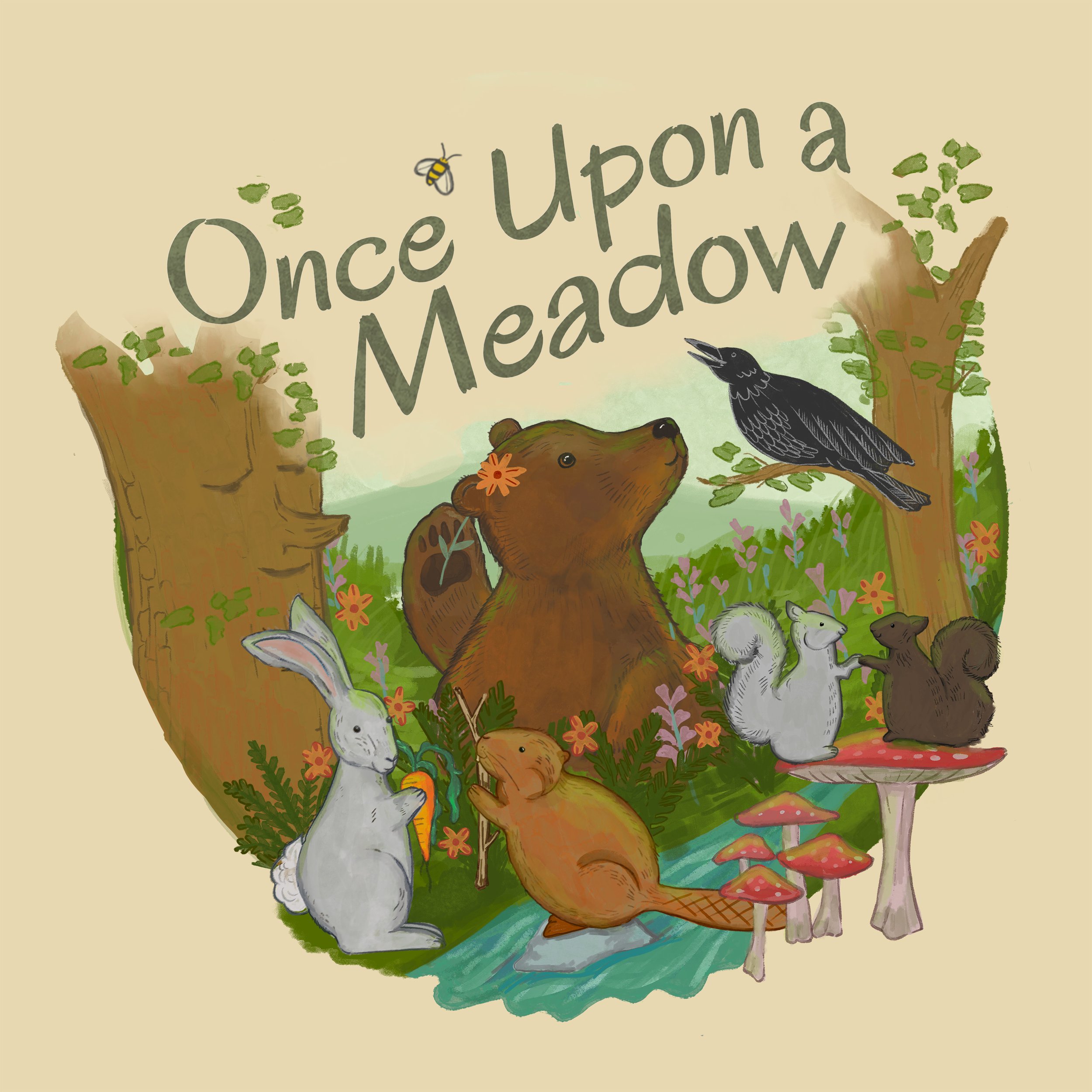
Once Upon a Meadow cover art

New kids’ podcast!

Once Upon a Meadow brings you gentle, uplifting stories for 4- to 9-year-olds.

The characters are a community of animals and plants who live in a meadow and work together to flourish, despite their differences.

Each episode is richly interwoven with original music.

Notes in the Trees

Why the Dutch get their kids lost in the woods — on purpose

Artwork by Magdalena Metrycka

 
It’s part of the Dutch culture ... that you are basically on your own in life, and you have to figure out your own way.
— Pia de Jong
 

BONUS EPISODE // Guest story from Nocturne

Most parents would never consider leaving their kids in the dark woods at night, and letting them find their way back. But the Dutch do just that. They call it Dropping.

On this episode, Vanessa Lowe explores how Dropping shapes young people’s ability to handle life.

This is a guest episode from Nocturne, a podcast that explores the night and how thoughts, feelings and behaviors transform in the dark.


Episode Notes

Credits

Story by Vanessa Lowe, produced for Nocturne in 2021.

Music in Vanessa’s story by Janet Feder, Myles Boisen, Pollen Music Group, and Kid Otter. Nocturne theme music by Kent Sparling.

Episode art by Magdalena Metrycka.

Additional Links

Out There’s forthcoming kids’ podcast, Once Upon a Meadow, is set to launch Feb. 7.

Out There and Nocturne are members of Hub & Spoke, a collective of smart, idea-driven independent podcasts.

Support Out There on Patreon and get an invitation to our virtual happy hour.

Follow Out There on Apple Podcasts, Spotify, Stitcher, or wherever you stream podcasts.


Fallen Sky

A sculpture that lets you see the world anew

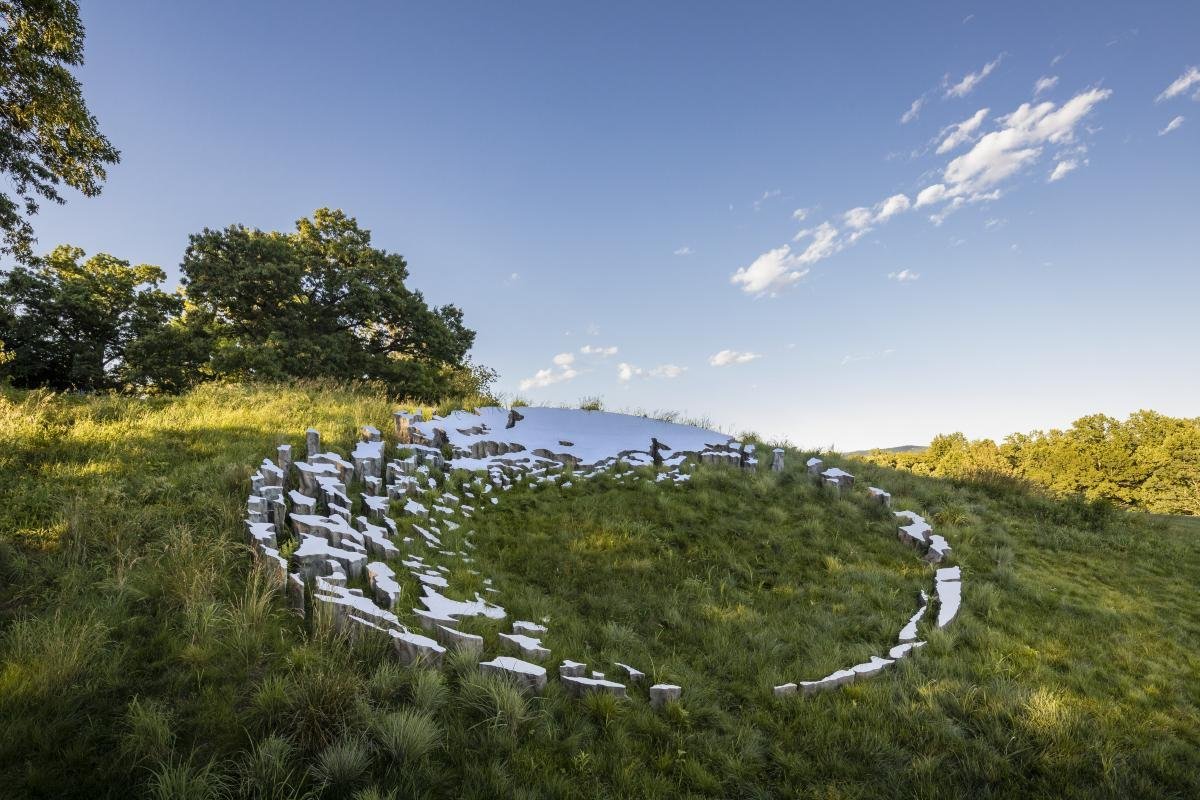
Sarah Sze’s “Fallen SKy”, located at Storm King Art Center (Photo courtesy Tamar Avishai)

 
When you’re interrupted by a sculpture in the middle of a landscape, it’s not really the sculpture you notice but the landscape itself.
— Tamar Avishai
 

BONUS // Guest Episode from The Lonely Palette

“Fallen Sky,” a work of installation art by Sarah Sze, is like a moon map etched into a hillside. On display at New York’s Storm King Art Center, its stainless-steel pillars are created to look like stone and mirror, ancient ruins that reflect the ever-changing sky.

On this episode, Tamar Avishai explores how Sze’s striking sculpture helps visitors pay attention to the world around us — and the world inside our head.

This is a special guest episode from The Lonely Palette, a podcast that returns art history to the masses, one object at a time.

Read the episode transcript here.

Follow Out There on Apple Podcasts, Spotify, Stitcher, or wherever you stream podcasts.


Episode Notes

Credits

Story by Tamar Avishai, produced for The Lonely Palette in 2021, with support from Storm King Art Center

Music in Tamar’s story: Django Reinhardt, “Django’s Tiger” • The Andrews Sisters, "Bei Mir Bist Du Schoen" • The Blue Dot Sessions, “Plate Glass,” “Leatherbound,” “The Onyx,” “Silent Ocean,” “ZigZag Heart,” “Curious Case,” “On Top of It” • Evan Blanch, “Where The Streets Have No Name (Instrumental)” (U2 cover)

Additional Links

“Fallen Sky” is on display at Storm King Art Center

Out There’s forthcoming kids’ podcast, Once Upon a Meadow, is set to launch in February.

Out There and The Lonely Palette are members of Hub & Spoke, a collective of smart, idea-driven independent podcasts.

Support Out There on Patreon


Fear Is the Thing with Fins

What if your own anxiety is the most dangerous part?

 
Life is a risk. And I’m not about to stop because there are some fears.
— Pat Gallant-Charette
 

BONUS // Guest Episode from The Briny

Fear is a powerful indicator that something could hurt us. But sometimes, the fear itself is the most dangerous part.

This is the story of marathon swimmer Pat Gallant-Charette. Because of something that happened to her when she was a teenager, Pat has to overcome a fear of deep water every time she competes. But she doesn’t let that stop her.

This is a special guest episode from The Briny, a podcast about how we’re changing the sea, and how the sea changes us.

Follow Out There on Apple Podcasts, Spotify, Stitcher, or wherever you stream podcasts.


Episode Notes

Credits

Story and sound design by Matt Frassica

Additional Links

This story is from The Briny. It first aired in 2021.

You can find Pat Gallant-Charette here and see her swimming records here.

Out There and The Briny are members of Hub & Spoke, a collective of smart, idea-driven independent podcasts.

Support Out There on Patreon


This episode sponsored by


About the Journey


High on Failure

Why hitting your breaking point could make you happier

Jordan Wirfs-Brock competes in the inaugural Infinitus race (photo by Victoria Petryshyn)

 
I had been building up this hard, heavy shell of stress, and when my body broke, the stress broke away, too.
— Jordan Wirfs-Brock
 

Season 3 // Episode 8

Every year, in the mountains of Vermont, a group of ultra runners gather for a 550-mile race called Infinitus.

It’s one of the toughest trail running races in existence.

Jordan Wirfs-Brock was no stranger to ultra marathons, but Infinitus broke her: she failed to finish. Surprisingly, though, the failure turned out to be one of the best things that's ever happened to her.

On this episode, Jordan takes us with her to the race course and shares the story of what happened.

This story first aired in 2016, and it won a gold medal for best independent podcast from Public Radio News Directors, Inc., or PRNDI.

Read the full episode transcript here

Follow Out There on Apple Podcasts, Spotify, Stitcher, or wherever you stream podcasts.


Episode Notes

Credits

Story and sound design by Jordan Wirfs-Brock

Script editing by Willow Belden

Music includes selections from AudioBlocks

Additional Links

Support Out There on Patreon

If you’re really into suffering ultra-running, check out Infinitus

Follow Jordan on Twitter @jordanwb


PeakVisor

Athletic Greens

Get a FREE one-year supply of Vitamin D and 5 FREE travel packs with your first purchase at athleticgreens.com/outthere

About the Journey

Pedaling and Paddling

What if the thing that brings you together also pulls you apart?

Dewey Gallegos on a mountain bike and Jessica Flock on a river (photos courtesy Dewey Gallegos and Jessica Flock)

 
When I saw what Jessica did — like, when she showed me a video of what rafting was ... I just remember thinking she was insane.
— Dewey Gallegos
 

Season 3 // Episode 7

Dewey Gallegos and Jessica Flock bonded over their passion for the outdoors. But they soon realized that the thing they had in common was also one of their biggest differences.

Their story takes us from the mountains of Wyoming to the rivers of Arizona and explores how hard it can be to share the thing you love most, with the person you love most.

This story first aired in 2015.

Click here to read the episode transcript.

Follow Out There on Apple Podcasts, Spotify, Stitcher, or wherever you stream podcasts.


Episode Notes

Credits

Story and sound design by Willow Belden

Script editing by Leigh Paterson

Music includes selections from AudioBlocks and Blue Dot Sessions

Additional Links

Find Dewey Gallegos at the Pedal House and Jessica Flock at the Paddle House

Pitch a story for our next season

Check out the series “Illuminations” from Ministry of Ideas

Support Out There on Patreon


This episode sponsored by

PeakVisor

Athletic Greens

Get a FREE one-year supply of Vitamin D and 5 FREE travel packs with your first purchase at athleticgreens.com/outthere

About the Journey

The Instinct to Kill

Deep down, are we all hunters?

 
I was curious about this ancient ritual — this masculine tradition where you go into the woods, just you and your dad, to go hunting. And you come out changed, somehow. Maybe more grown up.
— Sam Anderson
 

Season 3 // Episode 6

When Sam Anderson’s father invited him to go hunting for the first time, Sam was worried. What if he couldn’t bring himself to pull the trigger? And conversely, what if he could? What would that say about him?

On this episode, Sam takes us into the woods of New Jersey and explores the emotional complexity of taking the life of an animal.

This story first aired in 2017. It won a national award — first place for Best Independent Podcast — from Public Radio News Directors, Inc.

Click here to read the episode transcript.

Follow Out There on Apple Podcasts, Spotify, Stitcher, or wherever you stream podcasts.


Episode Notes

Credits

Story and sound design by Sam Anderson

Script editing by Willow Belden

Music includes selections from AudioBlocks and Blue Dot Sessions

Additional Links

Out There is a proud member of Hub & Spoke

Support Out There on Patreon

Sam Anderson’s upcoming series, entitled Crooked City Season 2: The Emerald Triangle, comes out Nov. 7.


This episode sponsored by


PeakVisor

Athletic Greens

Get a FREE one-year supply of Vitamin D and 5 FREE travel packs with your first purchase at athleticgreens.com/outthere


Too Poor to Dream?

How do you build a life of adventure when you’re barely scraping by?

for years, CHARLSIE SHAVER has yearned FOR A LIFE in the outdoors — but forging a new path hasn’t been straightforward. (PHOTO BY CHARLSIE SHAVER)

 
It can be hard to want stability and freedom at the same time.
— Charlsie Shaver
 

Season 3 // Episode 5

We often hear that “the outdoors is free.” But for Charlsie Shaver, just driving to a trailhead was often cost-prohibitive; hitting the road to explore America’s wild places was a luxury she could only dream of.

On this episode, Charlsie explores what it takes to build the life you want. How do you balance the need for stability with a thirst for freedom? And how do you keep dreaming, when you can barely pay the rent?

This story first aired in 2019.

Click here to read the episode transcript.

Follow Out There on Apple Podcasts, Spotify, Stitcher, or wherever you stream podcasts.


Episode Notes

Credits

Story and narration by Charlsie Shaver

Editing and sound design by Willow Belden

Music includes selections from AudioBlocks and Blue Dot Sessions

Additional Links

Follow Charlsie on Instagram @chickadeenatives and @mydestinyisunbound

Check out Charlsie’s native plant nursery here

Support Out There on Patreon


This episode sponsored by


PeakVisor

Athletic Greens

Get a FREE one-year supply of Vitamin D and 5 FREE travel packs with your first purchase at athleticgreens.com/outthere


Selfless Acts

Why are some people overly generous?

BILL APPEL TALKS WITH A TRAVELER AT HIS AID STATION ALONG THE COLORADO TRAIL. (PHOTO BY WILLOW BELDEN)

 
I think even the most selfless people ultimately may be doing it for their own ego.
— Bill Appel
 

Season 3 // Episode 4

Bill Appel has devoted his retirement years to helping strangers.

He’s a “trail angel,” which means he hangs out on long-distance trails (the Appalachian Trail, the Continental Divide Trail, etc.) and brings treats to thru-hikers. He gives them food and water, offers rides into town to resupply, and cheers them on at some of the most demoralizing points in their journeys.

It’s a year-round operation, and he does it all for free.

On this episode, we pay a visit to one of his aid stations, and we explore what makes a person act so selflessly. (Hint: it’s probably not what you’d expect).

This story first aired in 2018, and it won a gold medal for best independent podcast from Public Radio News Directors Incorporated, or PRNDI.

Click here to read the episode transcript.

Follow Out There on Apple Podcasts, Spotify, Stitcher, or wherever you stream podcasts.


Episode Notes

Credits

Story and sound design by Willow Belden

Story editing by Becky Jensen

Music includes selections from AudioBlocks and Blue Dot Sessions

Additional Links

Support Out There on Patreon


This episode sponsored by


PeakVisor

Kula Cloth

For 15% off your Kula Cloth order, click here and enter the promo code “outtherepodcast15” at checkout.


Blue Dive

Letting go of success — and finding your bliss

Tiffany Duong on a dive (Photo courtesy Tiffany Duong)

 
I’m determined to keep creating a life I don’t need a vacation from.
— Tiffany Duong
 

Season 3 // Episode 3

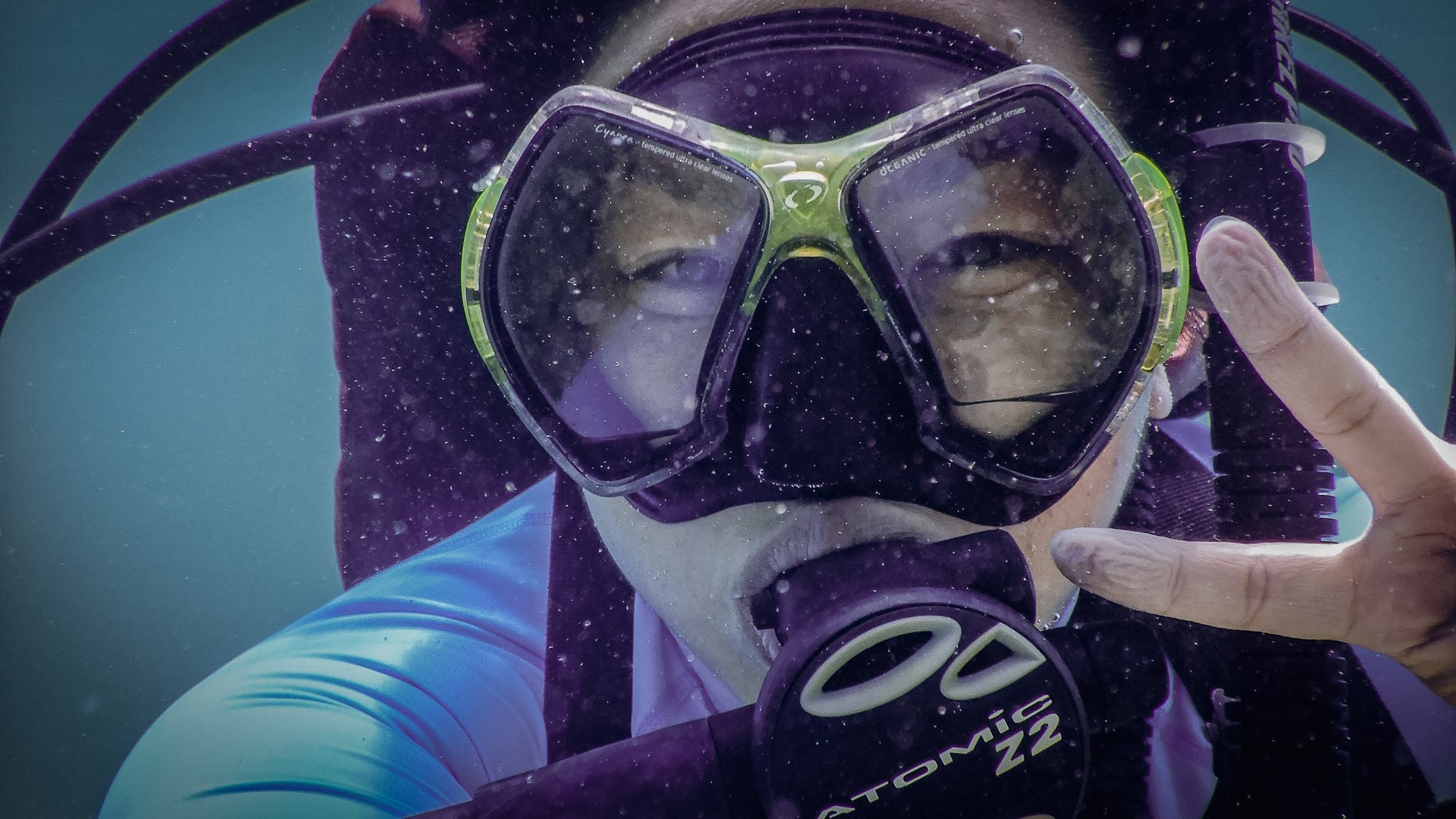
Tiffany Duong had achieved the pinnacle of success: she’d finished law school, worked for a big firm in LA, and traveled as much as she could. But she was miserable.

Then she went scuba diving in the Galapagos, and everything changed. Her story is about letting go of your safety net, embracing the unknown, and finding bliss.

This story first aired in 2018.

Click here to read the episode transcript.

Follow Out There on Apple Podcasts, Spotify, Stitcher, or wherever you stream podcasts.


Episode Notes

Credits

Story by Tiffany Duong

Editing and sound design by Willow Belden

Production assistance from Sara Hossainai

Music and sound effects include selections from AudioBlocks and Martin Erdtmann

Additional Links

Support Out There on Patreon

Follow Tiffany on Instagram and Twitter


This episode sponsored by


PeakVisor

Kula Cloth

For 15% off your Kula Cloth order, click here and enter the promo code “outtherepodcast15” at checkout.


Failure In Success

Why reaching a goal can make you miserable

Willow Belden leaves an aid station to cycle the final 18 miles of the Laramie Enduro in 2015 (photo by Leigh Paterson)

 
Succeeding at something doesn’t make it worth doing.
— Willow Belden
 

Season 3 // Episode 2

In 2015, Willow Belden signed up for a 70-mile mountain bike race called the Laramie Enduro. She had always liked big athletic challenges. But this time, pushing her limits turned out to be a mistake.

On this episode, she shares her story. It's about trying to prove yourself — and learning when to say, “No.”

This story first aired in 2015, and it received a national award from Public Radio News Directors Inc. (second place for best independent podcast).

Click here to read the episode transcript.

Follow Out There on Apple Podcasts, Spotify, Stitcher, or wherever you stream podcasts.


Episode Notes

Credits

Story and sound design by Willow Belden

Editing by Leigh Paterson

Music includes selections from AudioBlocks

Additional Links

Support Out There on Patreon
Laramie Range Epic (formerly known as the Laramie Enduro)


This episode sponsored by


PeakVisor


Moral Compass

How do you decide whether to leave someone for dead?

MYLES OSBORNE'S CLIMBING GUIDE, DAN MAZUR (RED COAT), AND CLIMBER LINCOLN HALL (ORANGE) SHORTLY AFTER OSBORNE'S TEAM DISCOVERED HALL ON THE MOUNTAIN (PHOTO BY ANDREW BRASH)

 
As human beings, we tend to convince ourselves of certain things, and then we look for the evidence to back up the point that we want to make.
— Myles Osborne
 

Season 3 // Episode 1

When Myles Osborne set out to climb Mt. Everest, he knew he was up against a dangerous mountain. What he didn't consider was that it might not be his own life on the line.

Producer Phoebe Flanigan brings us Myles' story, exploring how we make moral decisions — like whether or not to help someone who's nearly dead.

This story first aired in 2017.

Follow Out There on Apple Podcasts, Spotify, Stitcher, or wherever you stream podcasts.


Episode Notes

Credits

Story by Phoebe Flanigan

Editing by Willow Belden

Sound design by Chema Flores

Additional Links

Support Out There on Patreon


This episode sponsored by


PeakVisor


TRAILER: Nature's Nostalgia

As the world reopens, and you return to the things you once loved, let Out There be your sound track.

Our summer season will fuel your adventures with award-winning narratives and beloved fan favorites from the early days of Out There.

Each episode will sweep you into nature, invite you to think big, and offer inspiration for living your best life. Here’s a preview.

Follow Out There on Apple Podcasts, Spotify, Stitcher, or wherever you stream podcasts.

Special thanks to Jessica Taylor and Sheeba Joseph for editorial assistance on this trailer.

BONUS: Adult-Onset Hunting

A guest episode from The Modern West podcast

Jessi Johnson, the founder of Artemis, teaches a woman how to load bullets into a hunting rifle at an all-women’s outdoor camp called BOW (short for Becoming An Outdoor Woman). Photo by Patrick Wine

The number of Americans hunting and fishing is declining, but women are bucking the trend.

On this guest episode from The Modern West podcast, journalist Melodie Edwards finds a sisterhood at an all-women hunting camp—and catches her first fish with her dad.


Follow Out There on Apple Podcasts, Spotify, Stitcher, or wherever you stream podcasts.


We’re looking for a marketing coordinator!

Out There is developing a new podcast series for children, and we’re looking for an enthusiastic person to join our team on a freelance basis to help us get the word out.

Applications due June 5, 2022.

Beach Bum

I thought I was a mountain mama

Padre Island National Seashore (Photo by Bo Jensen)

 
I didn’t just feel like I had to act as both mother and father. I felt like I was both.
— Bo Jensen
 

Season 2 // Episode 8

It’s healthy to know who you are. But sometimes, defining yourself too rigidly can be problematic.

On this episode, Bo Jensen takes us from the Gulf of Mexico to the Camino de Santiago and explores what happens when you stop forcing yourself to choose a single identity.

It’s a story about embracing the totality of who you are — and falling in love with new environments, one beach at a time.

Episode Transcript

Follow Out There on Apple Podcasts, Spotify, Stitcher, or wherever you stream podcasts.


Help us improve!

Share your thoughts on the spring season & get 30% off Out There merch.


Episode Notes

Credits

  • Story by Bo Jensen

  • Story editing and sound design by Willow Belden

  • Music includes selections from Blue Dot Sessions and Storyblocks

Additional Links


Sponsors


PeakVisor

MPowerd

Take 25% off your purchase at mpowerd.com with promo code “GetOutThere”


Never Enough

I thought I needed more from my relationship — and from nature

Shi Shi Beach (Photo by Paul Barach)

 
I still wonder if there was something I could have said — some magic combination of words that, when put together the right way at the right time, could have kept her in this world.
— Paul Barach
 

Season 2 // Episode 7

When we lose a loved one, many of us seek healing from the outdoors. But what happens when nature doesn’t cooperate — when the weather is bad, and your happy place is miserable? 

Today’s story takes us to “the most beautiful beach in Washington State” and explores what can we learn about grief and acceptance when nature is at its ugliest.

Read the full episode transcript.

Follow Out There on Apple Podcasts, Spotify, Stitcher, or wherever you stream podcasts.


Episode Notes

Credits

  • Story by Paul Barach

  • Story editing by Forrest Wood and Willow Belden

  • Sound design by Willow Belden

  • Music includes selections from Blue Dot Sessions and Storyblocks

Additional Links


Help us shape our next season!

Take our poll to vote for the stories you’d like to hear.


This episode sponsored by


PeakVisor

[Un]Natural Selection

A special season of Points North from Interlochen Public Radio


Measuring Up

I thought if I pushed myself harder, things would get easier

Christine Reed on the Colorado Trail (Photo courtesy Christine Reed)

 
Now that I’m not always trying to get there, I can ... enjoy being here.
— Christine Reed
 

Season 2 // Episode 6

It’s easy to measure our achievements based on what other people are doing. But how do you know what you should really expect from yourself?

This episode takes us from a mountain in Arkansas to an attempted thru-hike on the Appalachian Trail and explores how much better life can be when you realize your shortcomings might not be your fault.

Christine Reed has the story.

Read the episode transcript here.

Follow Out There on Apple Podcasts, Spotify, Stitcher, or wherever you stream podcasts.


Episode Notes

Credits

  • Story by Christine Reed

  • Editing and sound design by Willow Belden

  • Music includes selections from AudioBlocks and Blue Dot Sessions

Additional Resources


Sponsors

SaltStick

For 20% off your purchase at saltstick.com, enter the promo code OUTTHERE at checkout

PeakVisor

Kula Cloth

Save 15% on your Kula Cloth order with promo code “outtherepodcast15”