Under the Radar

A conversation about the ground-breaking mountaineer you never heard of

 
Christine Boskoff (photo courtesy Johanna Garton)

Christine Boskoff (photo courtesy Johanna Garton)


“[The monks at Lenggu Monastery] said very matter-of-factly to me that the mountain is mighty, and if the mountain is not happy, the mountain will send you down.”

— Johanna Garton


Christine Boskoff was a mountaineer who pushed boundaries and set records on the world’s highest peaks.

She climbed mountains that no North American woman had ever summited, and she was the only American woman to have reached the top of six of the world’s 8,000-meter peaks. She was also a well-respected guide.

But despite her impressive resume, Chris’s story went largely untold — until this year.

This spring, writer Johanna Garton published a book called Edge of the Map, chronicling Chris’s rise in the mountaineering world. Johanna joins us to talk about how Chris got her start, the challenges she faced as a woman in a man’s realm, and the complicated moral questions surrounding her death on a sacred mountain.


Want to read the book?

You can buy signed copies of Edge of the Map here.


Discounts from our sponsors

Better Help

For 10% off your first month of counseling, click the button below.

Sawyer

For 25% off your Sawyer order, enter the promo code “OTPOD25” at checkout.

Kula Cloth

For 15% off your Kula Cloth order, enter the promo code “OUTTHERE2” at checkout.

Different Shades of Fear

Why are some people so good at keeping their cool?

 
David Klebosky on a backpacking trip in the grand canyon (Photo courtesy David Klebosky)

David Klebosky on a backpacking trip in the grand canyon (Photo courtesy David Klebosky)


“He never looked at the world as a threat; he looked at it as things you could learn or experience.”

— Tom Klebosky


When David Klebosky was out in the desert earlier this year, he ended up being shot at. The gunfire wasn’t malicious, but there were bullets coming at him.

Yet David didn’t freak out.

Turns out, this kind of response is typical for David; he always seems to remain calm in the face of stress. Whether it’s an outdoor adventure that goes awry, or uncertainty about his career, he manages to keep his cool.

On this episode, producer Max Wasserman delves into David’s past and explores what makes some of us so unflappable.

Max Wasserman is the producer of Everytown, a podcast about a shadow campaign to remove immigrants from one of the wealthiest parts of the country. It's a serialized show with elements of mystery and news, exactly the type of thing you’d enjoy if you liked Serial Season 3. Listen wherever you get your podcasts.


Sponsors & Discount Codes

Kula Cloth

For 15% off your Kula Cloth order, enter the promo code “OUTTHERE2” at checkout.

Sawyer

For 25% off your Sawyer order, enter the promo code “OTPOD25” at checkout.

Better Help Square.png

For 10% off your first month of counseling, click the button below.

Resilience Through Diversity

A Black scientist, a coral rescue project, and a lesson from the ocean

 
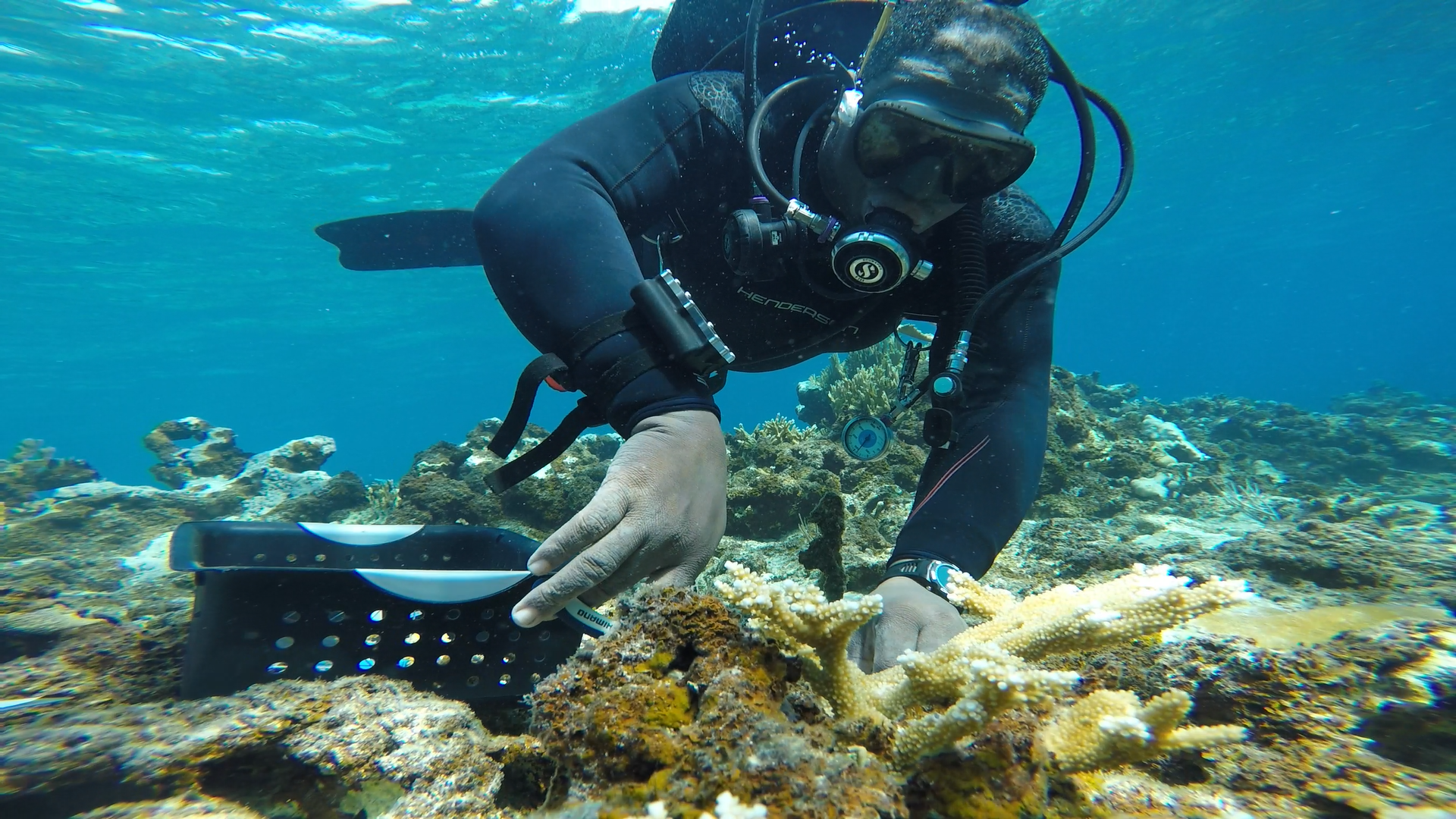
Colin Howe is a marine biologist focusing on corals (Photo courtesy Colin Howe)

Colin Howe is a marine biologist focusing on corals (Photo courtesy Colin Howe)


“There are so many examples that we can see in the wild of where diversity … can benefit the ecosystem as a whole. And I think there is something we can take from that and apply to our very lives.”

— Colin Howe


As a marine biologist, Colin Howe sees diversity as an indicator of health: the more diverse an ecosystem, the more likely it is to thrive.

But while scientists work hard to preserve diversity in the wild, they often fail to achieve it in the workplace.

Colin is one of just a handful of Black biologists in the United States. According to the National Science Foundation, less than 5 percent of scientists and engineers in the U.S. are Black.

On this episode, we talk with Colin about pursuing his passion in a predominantly white field. And we discuss what the oceans can teach us about the benefits of diversity.


Support for Out There comes from

 
Kula Cloth

For 15% off your Kula Cloth order, enter the promo code “OUTTHERE2” at checkout.

Sawyer

For 25% off your Sawyer order, enter promo code “OTPOD25” at checkout.

Renogy

For 10% off your Renogy order, enter the promo code “OUTTHERE” at checkout.

Better Help

For 10% off your first month of counseling, click the button below.


The Tools to Thrive

Is nature necessary for an emotional reset?

 
Small beauty on the Camino de Santiago (Photo by KC Cheng)

Small beauty on the Camino de Santiago (Photo by KC Cheng)


“The loneliness of the Camino in winter was exactly what I needed. … I enjoyed the luxury of walking at my own pace and not having to worry about making conversation.”

— KC Cheng


When KC Cheng decided to hike the Camino de Santiago, she imagined it as a kind of therapy. She wanted to feel young and adventurous again, in charge of her own life.

Like so many other thru-hikers, she saw a long-distance trek as a much-needed opportunity for an emotional reset.

But what does a long-distance solo trek really do to a person? Does “getting away from it all” change us in a fundamental way?

On this episode, KC shares the story of the surprising realization she made as a result of her pilgrimage.

KC Cheng is a photojournalist and ecologist. You can see more of her work here.


This episode sponsored by

Renogy Logo.jpg

For 10% off your Renogy order, enter the promo code “OUTTHERE” at checkout.


Black and Outdoorsy

Ron Griswell’s uphill battle to get students of color outside

 
Ron Griswell is an adventurer and outdoor educator seeking to help students of color get outside. (Photo courtesy Ron Griswell)

Ron Griswell is an adventurer and outdoor educator seeking to help students of color get outside. (Photo courtesy Ron Griswell)


“Growing up, I’ve always heard … ‘You’re going to have to work twice as hard to get what someone who is white has.’”

— Ron Griswell


If you attended a predominantly white college or university, there was probably an outdoors program on campus. And it was likely composed of mostly white people.

If you went to a historically Black college or university, chances are, there was no outdoor program. And you probably grew up hearing that the outdoors was for white people.

On this episode, we talk with outdoor adventurer and educator Ron Griswell about his efforts to close the adventure gap. We share the story of how Ron became a leader in the outdoor industry; we discuss the barriers that keep many people of color from engaging in outdoor adventures; and we talk about the ways that Black joy can help combat racist narratives.


Black Joy

For Ron Griswell, “Black joy” is an means of resistance — an unapologetic expression of freedom and happiness that can help erode negative stereotypes.

For our Black listeners: How do you define “Black joy?” What does it mean to you? If you send us a voice message by July 31, 2020, we might air it on the show!

This episode sponsored by


For 25% off your order at sawyersafetravel.com, enter the promo code “OTPOD25” at checkout.

For 10% off your Renogy order, enter the promo code “OUTTHERE” at checkout.
For 10% off your first month of counseling, click here.

The Sweetness of Suffering

 
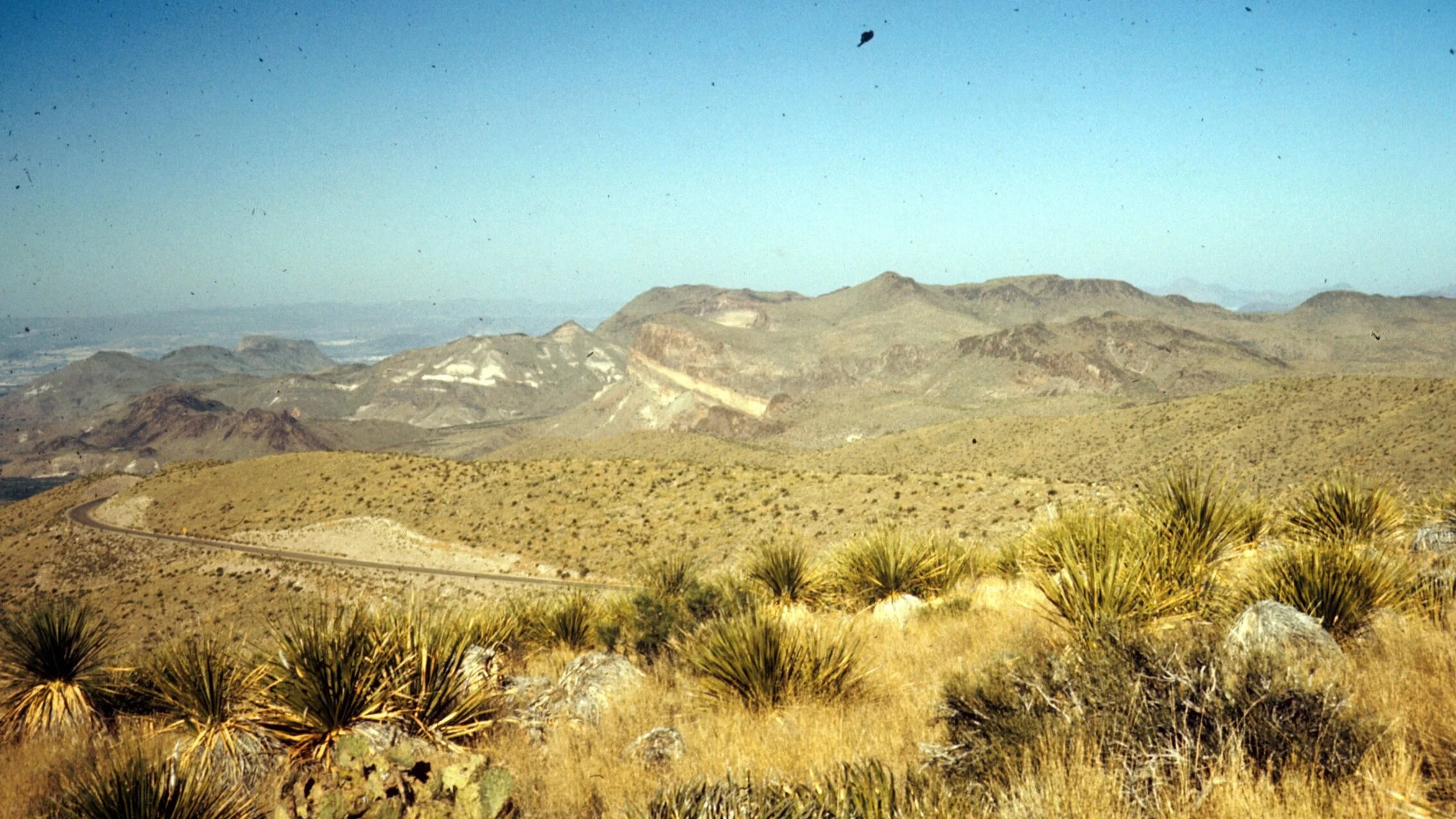
Big Bend National Park (Photo by the U.S. Geological Survey)

Big Bend National Park (Photo by the U.S. Geological Survey)


“We all know that bad experiences make for good stories. But it’s become clear to me … that the bad experiences actually make our lives better.”

— Megan McLaughlin


Can hardships enhance our lives?

Everyone suffers. Sometimes it’s obvious; other times it’s less visible. But it’s inevitable that we’ll suffer at some point in our lives. And typically, we hate it.

But what if hardships serve a purpose? What if the struggles we try so hard to avoid could actually enhance our lives?

On this episode, Megan McLaughlin takes us from Big Bend National Park to the forests of Arkansas, and explains how she has found sweetness, both in miserable outdoor experiences, and in a cancer diagnosis.


This episode sponsored by

 
Renogy Logo.jpg

For 10% off your Renogy order, enter the promo code “OUTTHERE” at checkout.


Acceptance

How a freak climbing accident alleviated deep emotional pain

 
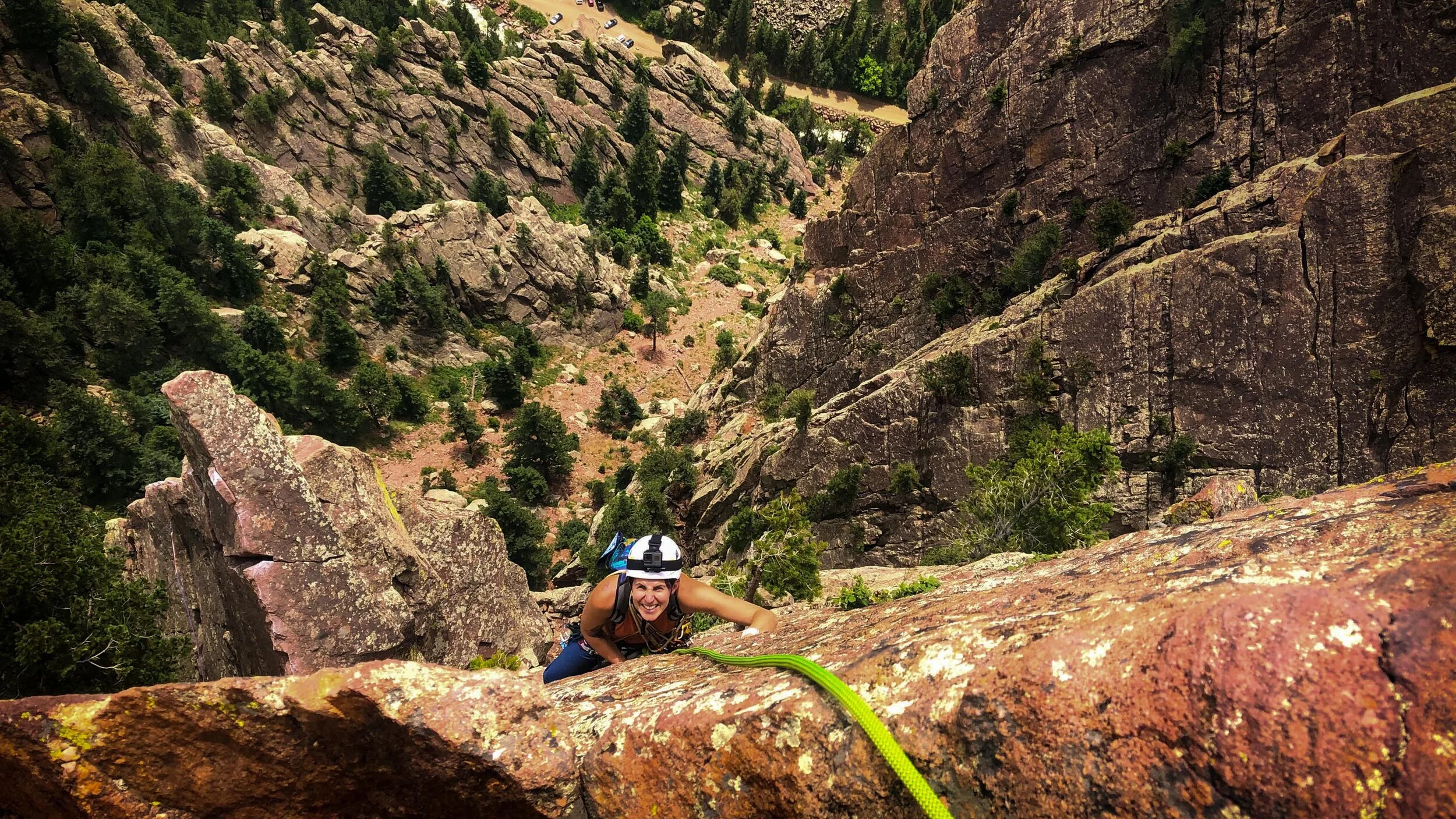
Rock climbing was a haven for Meg Atteberry — until an accident changed everything (Photo courtesy Meg Atteberry)

Rock climbing was a haven for Meg Atteberry — until an accident changed everything (Photo courtesy Meg Atteberry)


“All I ever wanted was for [my parents] to cheer me on and say they were proud of me. … But that never happened.”

— Meg Atteberry


Growing up in an emotionally abusive household, Meg Atteberry yearned for her parents’ approval. But no matter how hard she tried, the message was always the same: you are not enough. The emotional scars from her upbringing lingered long into adulthood.

Then one day, Meg took a dangerous fall while rock climbing.

The brush with death resulted in fresh trauma. But in the aftermath of the accident, something surprising started to happen.

On this episode, Meg shares the story of how a freak accident changed her relationship with climbing, and with her parents.


Meg Atteberry is a freelance content writer living in Denver, CO. You can see more of her work, including her outdoor blog, at Fox in the Forest.


This episode sponsored by

Sawyer

For 25% off your Sawyer order, enter the promo code “OTPOD25” at checkout.

Renogy Logo Square.png

For 10% off your Renogy order, enter the promo code “OUTTHERE” at checkout.

Copper Logo Square.png

Save 30% off your first order at coppercompression.com/outthere


Alex Honnold's Mother

A conversation with Dierdre Wolownick about parenting a world-famous climber

 
Dierdre WOlownick trains on El Capitan’s Heart Lines (Photo by Karissa Frye)

Dierdre WOlownick trains on El Capitan’s Heart Lines (Photo by Karissa Frye)


“The important job of a parent is to know when to let go.”

— Dierdre Wolownick


Dierdre Wolownick is the oldest woman to have climbed El Capitan in Yosemite National Park. She’s also a teacher, a musician, a marathon runner — and the mother of renowned rock climber Alex Honnold.

On this episode, we talk with Dierdre about what it was like raising a kid like Alex.

We discuss her efforts to keep Alex safe as a child, without stifling his love for climbing. We talk about the difference between risk and consequence. And we explore Dierdre’s own journey to becoming a climber, and how learning about her son’s passion changed their relationship.


Dierdre Wolownick’s memoir is called The Sharp End of Life

You can find it here.


This episode is sponsored by

Renogy

For 10% off your order, enter the promo code “OUTTHERE” at checkout.


Becoming Better Allies

The road to amplifying BIPOC voices in outdoor stories

 
The outdoors should be place where anyone can go, without fear of harassment, discrimination, or violence.

The outdoors should be place where anyone can go, without fear of harassment, discrimination, or violence.


“I’m always making risk calculations about whether a trip outside is worth the real danger of being perceived as a threat simply due to the color of my skin.”

— Sean Amegadzie


Black Lives Matter.

The events that have been unfolding over the past few weeks have made it very clear that all of us need to be doing much more to actively fight racism. One of the ways that Out There can help is to use our platform to amplify the voices of Black, Indigenous and People of Color.

The outdoors should be a place where anyone can go, without fearing violence, harassment, or discrimination.

On this episode, we talk about what we, as a podcast, commit to doing, to become part of the solution rather than adding to the problem.


Meet the people who shared Instagram posts on this episode

Sean Amegadzie

Follow Sean on Instagram: @drseanmdmba

Lindsay Short

Follow Lindsay on Instagram: @raisedrootedandwild


Reading & Listening Resources for Allies

The book I mentioned on the show was Me and White Supremacy by Layla Saad.

For additional reading and listening suggestions, check out our blog.

Also, here’s a great Ally Resource Guide.


Birding While Black

Nature is not a safe haven for People of Color

 
Drew Lanham (photo courtesy Drew Lanham)

Drew Lanham (photo courtesy Drew Lanham)


“I could see people taking their binoculars down and looking at me. Because here’s this Black guy with this mostly White … class of students, explaining birds to them."

— Drew Lanham


The events that have been unfolding across the United States over the past weeks have driven home once again that simply existing carries risks if you have dark skin.

Many of us like to think that nature is an equalizer — a place to escape the injustices of society. But it’s not so simple.

On this bonus episode, producer Jackie Sojico bring you a story that first aired several years ago. It’s about ornithologist and birder Drew Lanham and his quest to pursue his passion outdoors as a POC.

Special thanks to BirdNote for letting us use audio from the “Rules For the Black Birdwatcher” video. The video was produced by Ari Daniel Shapiro. 

 
Photo by Suzy Hazelwood

Photo by Suzy Hazelwood

For Further Reading

You can find additional reading and listening suggestions on our blog, and here’s an excellent Ally Resource Guide.


Vanlife and COVID

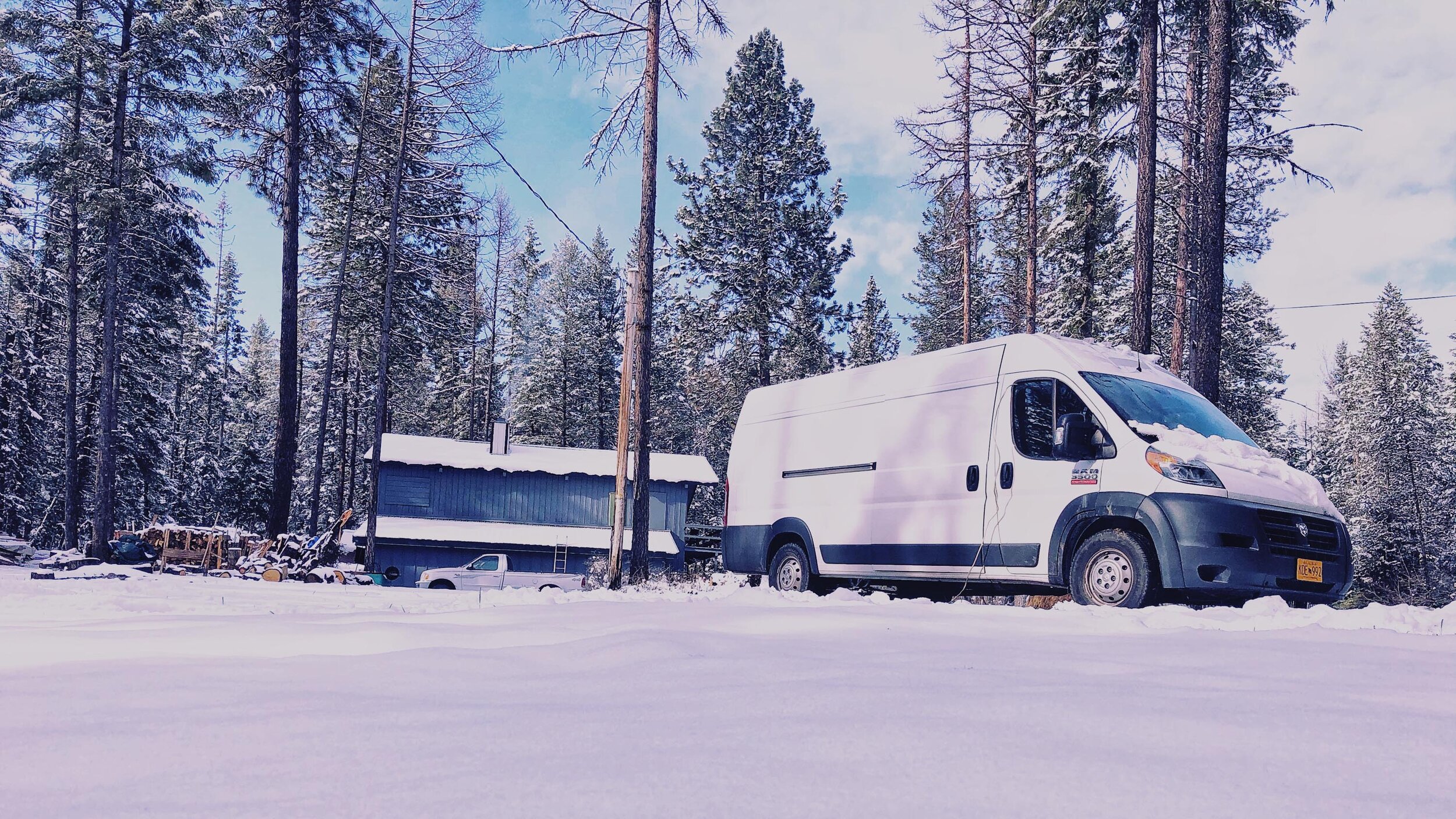
What does ‘stay at home’ mean when you don’t have a home?

 
Public lands and campgrounds across the nation have been closing due to covid, forcing van lifers to switch gears. (Photo by Amber McDanieL)

Public lands and campgrounds across the nation have been closing due to covid, forcing van lifers to switch gears. (Photo by Amber McDanieL)


“This has really made it very clear that society is not built for people that don’t have a single home in a static location.”

— Amber McDaniel


Amber McDaniel lives on the road full-time. She and her partner are both freelance writers, so working remotely isn’t a problem for them. And they love the freedom to spend their days in America’s most beautiful natural places.

But what happens to van lifers when a pandemic hits? Where do you go, when campgrounds and public lands start to close?

On this episode, Amber joins us to talk about “staying home” when you don’t have a home.


Want to hear more from Amber?

Check out her vanlife website, Always the Adventure.


Discount codes from our sponsors

Take 10% off your Renogy order with promo code “OUTTHERE”

Take 25% off your Sawyer order with promo code “OTPOD25”

Take 10% off your first month of counseling by clicking here.


Beginners

Selected stories from the Out There live show

 
Storytellers (from left to right): Ashley White, Natasha Buffo, and Jessica Taylor

Storytellers (from left to right): Ashley White, Natasha Buffo, and Jessica Taylor


“A good friend … doesn’t wait for you to tell her what you need; she just knows, and she takes care of it.”

— Natasha Buffo


On this bonus episode, we bring you several tales from Out There’s live storytelling night earlier this month.

Each story touches on the theme of being a beginner in the outdoors:

  • Ashley White shares the story of his son’s injury on their first-ever backpacking trip together

  • Jessica Taylor explores the lessons she’s learning as she transitions from life in a house to a life on the road

  • Natasha Buffo reflects on the intertwined experiences of falling in love with backpacking, and losing a parent


Storytelling night square.png

Want to see the full live show?

We recorded it, so you can watch the rerun on demand.


Going It Alone

Is independence a sign of strength?

 
Bikepacking in Kyushu, japan (PHoto by Melanie Chambers)

Bikepacking in Kyushu, japan (PHoto by Melanie Chambers)


“I wanted desperately to prove I still had it — to be entirely independent and self-sufficient, a lone wolf badass living on her bike.”

— Melanie Chambers


Melanie Chambers loved traveling alone. So when she set off on a four-month solo bicycle trip through Japan and Korea, she wasn’t worried.

But almost immediately, loneliness set in.

On this episode, Melanie shares her story. It’s a story of trying to prove yourself, of discovering the limits of your independence, and of making sense of a worldview that prizes self sufficiency.


This episode sponsored by

Renogy Logo.jpg

For 10% off your Renogy order, enter the promo code “OUTTHERE” at checkout.


Storytelling night square.png

Did you miss our live show?

We recorded it, so you can watch the rerun on demand!


Out+There+internship

Be our summer intern!

Last call to apply for our summer production internship. Applications due May 15.

Out+There+scavenger+hunt

Bored on your neighborhood walks?

We put together an adult scavenger hunt!


BONUS: A Sneak Peak at our Live Show

 
The storytellers (clockwise from top left): Ashley White, Natasha Buffo, Amy Strieter, Kayla Bordelon, and Jessica Taylor

The storytellers (clockwise from top left): Ashley White, Natasha Buffo, Amy Strieter, Kayla Bordelon, and Jessica Taylor

Join us May 7 for real stories about first times in the outdoors

When Out There turned five earlier this year, we promised to throw a party.

That party is happening tomorrow, in the form of a live storytelling night. The theme for the evening is “beginners,” and five storytellers from across the country will share personal tales of first times in the outdoors.

On this bonus episode, we give you a taste of what you can expect if you join us.


Storytelling night square.png

Hope to ‘see’ you there!

WHEN: May 7 at 6 p.m. PST / 9 p.m. EST

WHERE: The Internet

HOW MUCH? Free!


Coping with Cancelled Dreams

How one kayaker is finding joy after abandoning her Inside Passage expedition

 
Susan Conrad’s expedition up the Inside Passage was supposed to be a 10-year anniversary trip; it was cancelled due to the Coronavirus pandemic (Photo by Susan Conrad)

Susan Conrad’s expedition up the Inside Passage was supposed to be a 10-year anniversary trip; it was cancelled due to the Coronavirus pandemic (Photo by Susan Conrad)


“Life isn’t about waiting for the storm to pass… it’s about learning to dance in the rain.”

— Anonymous


Susan Conrad was supposed to begin a three-month expedition up the Inside Passage on May 16. But like so many plans that have been derailed due to the Coronavirus pandemic, her voyage has been cancelled.

On this episode, we talk with Susan about how she’s coping with a disappointment of this magnitude.


Want to hear more from Susan Conrad?

For the story of her initial Inside Passage trip, click here.

For her memoir about that voyage, click here.

Join us for our first-ever live storytelling event!

Grab a drink and a snack, and curl up on your couch for an evening of true stories about first times in the outdoors.

Click here to save your seat.


Condenser Microphone Photo by Tommy Lopez.jpg

Be our summer production intern!

Want to hone your audio storytelling skills?

This internship is a chance to work with an award-winning podcast team on all aspects of production, from story selection and script editing, to sound design and mixing.

Applications are due May 15.


Discounts from our sponsors

 
Cusa Tea

For 30% off your Cusa Tea order, enter the promo code “OUTTHERE” at checkout.

Kula Cloth

For 10% off your Kula Cloth order, enter the promo code “OUTTHERE” at checkout.


Lessons from the Trail

What backpacking can teach us about living through a pandemic

 
Campsite on the John Muir Trail (Photo by Laura Joyce Davis)

Campsite on the John Muir Trail (Photo by Laura Joyce Davis)


“What I’m trying to do is sit with the reality of what we’re in right now, and not sugarcoat that, but at the same time, dig a little deeper … to see if we can find our way to hope.”

—Laura Joyce Davis


On this bonus episode, we share a story from the podcast Shelter in Place, about a backpacking trip on the John Muir Trail. The story takes us into the mountains of California and explores the parallels between hiking in the wilderness and adapting to a life of social distancing.

We also chat with Shelter in Place Host Laura Joyce Davis about how producing a daily podcast is helping her ward off depression and find bright spots amidst the hardship.


Shelter in Place

A daily podcast seeking to find sanity in a world that feels increasingly insane


Discounts from our sponsor

 
transparent kula logo .png

For 10% off your Kula Cloth order, enter the promo code “OUTTHERE” at checkout.


My Childhood Tribe

Is it juvenile to cling to the communities of our youth?

 
After attending Children’s Adventure Company as a kid, Ben Montoya joined the summer camp’s staff (Photo by Vladimir Chaloupka)

After attending Children’s Adventure Company as a kid, Ben Montoya joined the summer camp’s staff (Photo by Vladimir Chaloupka)


“I learned to trust nature as a place of community and comfort, somewhere to go when the world felt alienating.”

— Ben Montoya


For Ben Montoya, summer camp was more than just a place to play outside: it was his community, his tribe. As a teenager, he remained friends with fellow campers. And as a college student, he got a job teaching at the same camp he had attended as a child.

But when he went to grad school in New York City, he started feeling the need to wean himself off the camp community. He told himself it was time to grow up.

Then Coronavirus struck.

Quarantined in a basement with flu-like symptoms, Ben began to re-evaluate the role that community plays in our lives. On this episode, he shares his story.

 
Ben+Montoya

Ben Montoya is Out There’s production intern.

In addition to finishing up his master’s degree at NYU’s Center for Experimental Humanities, Ben is a musician and independent podcast producer. He co-hosts a comedy podcast called I Chews You and works on a podcast about climate change called The Multispecies Worldbuilding Lab.


If you have a stable income…


Please support Out There as generously as you can.

We know that many of you are facing extremely difficult situations at the moment, and we understand if additional expenditures are out of the question. We are grateful to count you as a listener, regardless of who you are and what your bank account looks like.

But if you are able, please consider becoming a patron of Out There. You can make a contribution in any amount — even if it’s just a dollar or two a month. Every gift makes a difference and helps us continue to produce stories during these difficult times.


Discount codes from our sponsors

 
Cusa Tea

For 30% off your Cusa Tea order, enter the promo code “OUTTHERE” at checkout.

Kula Logo Square.png

For 10% off your Kula Cloth order, enter the promo code “OUTTHERE at checkout.


For the Greater Good

Is it ethical to embark on a thru-hike during a global pandemic?

 
Many hikers are canceling long-distance treks this year due to covid-19 (Photo by Maggie Slepian)

Many hikers are canceling long-distance treks this year due to covid-19 (Photo by Maggie Slepian)


“There’s a sense of pride that comes with people seeing themselves make a sacrifice. … It’s gratifying to know that I made the right choice.”

— Maggie Slepian


The wilderness might seem like a good place to hide out during a pandemic. But the organizations that care for many of the nation’s long-distance trails are asking thru-hikers to cancel their trips this year.

The concern is that hikers could spread COVID-19 to communities along the trails when they stop to resupply. Many trail towns are small and isolated, lacking resources to handle an outbreak.

On this episode, we talk with two hikers who have cancelled their trips: Maggie Slepian, managing editor at The Trek, and Allison Gonzalez, who aborted her thru-hike of the Arizona Trail after just one week.

We talk about the ethical considerations that went into their decisions, the emotional impact of giving up a potentially life-changing journey, and some silver linings from the situation.


Want to read more?

Here’s a post that Maggie Slepian wrote, questioning the morality of thru-hiking during the Coronavirus pandemic. And here’s what she wrote when she decided to cancel her PCT hike.

Also, posts from three other thru-hikers: Jacob, Rachel, and Hayden.

Also mentioned on this episode…


Discounts from our sponsors

 
Cusa Square.png

Take 30% off your Cusa Tea order with the promo code “OUTTHERE”

Kula Logo Square.png

Save 10% on your Kula Cloth order with the promo code “OUTTHERE”


Geology of the Heart

How do you honor a loved one while also moving on?

 
Murray Perdue (Photo by Jess Nelson)

Murray Perdue (Photo by Jess Nelson)


“I really did feel kind of obsessed with keeping his memory alive.”

— Jess Nelson


When we lose a loved one, we often experience competing emotions and urges. On the one hand, we cling desperately to memories and mementos; on the other hand, we strive to “move on.”

Balancing the two can be tough.

On this episode, journalist Matthew Schneeman brings us the story of a fatal accident, and of one woman’s efforts to preserve the memories of her fiancee.

It’s a story that takes us from the Grand Canyon to Yellowstone, and explores what it takes to remember someone, while still moving forward.


Jess Nelson

Jess Nelson, the woman featured in this episode, is a photographer specializing in family adventure portraits. You can see more of her work here and follow her on Instagram here.


Discount codes from our sponsors

Cusa Square.png

For 30% off your Cusa Tea order, enter the promo code “OUTTHERE” at checkout.

Kula Cloth

For 10% off your Kula Cloth order, enter the promo code “OUTTHERE” at checkout.


Skiing Without Snow

Should we teach kids to fall in love with something they’re about to lose?

 
Boy skiing (photo by Pexels)

Boy skiing (photo by Pexels)


“My trust now must lie not with the belief that snow will always come, but that whatever comes as the world changes will be worth loving, too.”

— Elizabeth Miller


When Elizabeth Miller teaches kids to ski, her goal is to make them fall in love with the sport. In between teaching them how to do wedge turns, she lets them make snow angels and throw snowballs at the trees. She wants them to internalize the joy of winter.

But lately, she’s been wondering whether it’s cruel to help children fall in love with what they’re about to lose. With climate change threatening to shorten ski seasons by as much as three-fourths in some parts of the country, winter could become a rare commodity. Even with drastic climate initiatives, change is inevitable.

Where, then, does that leave us? Should we introduce children to natural wonders they won’t be able to enjoy as grownups? Or is there still — somehow — merit in letting them experience the beauty of a snowy world, even as that world is vanishing?


Out There is sponsored by

Take 30% off your order of Cusa Tea with the promo code “OUTTHERE.”

Take 15% off your Kula Cloth order with the promo code “OUTTHERE.”