The Right to Complain

If you have a problem, but others are worse off, should you shut up?

As an avid cyclist, James Bennett had a hard time adjusting to New Delhi’s high levels of air pollution (Photo by Ankur Gupta)

As an avid cyclist, James Bennett had a hard time adjusting to New Delhi’s high levels of air pollution (Photo by Ankur Gupta)

 
Here I was obsessing about my lungs, while this boy begs for survival on an empty stomach.
— James Bennett
 

In 2015, Australian journalist James Bennett moved to India, to take up a long-coveted role as a foreign correspondent.

James was an outdoorsy type: he liked to cycle, surf, camp, and fish. So he knew the move to India's crowded capital city was going to be hard. What he didn’t realize was how the experience would change his perspective on speaking up about your problems.

On this episode, he shares his story. It’s a story that first ran several years ago, but which feels surprisingly relevant again now.


Subscribe to Out There on Apple Podcasts, Spotify, Stitcher, or wherever you stream podcasts.

 
Summer internship 2021.png

Want audio storytelling skills?

And a mentor?

The Out There production internship is an excellent opportunity to work with an award-winning podcast team and develop your audio storytelling skills.

Think of it as a mentorship, where you’ll collaborate one-on-one with the show’s creator, Willow Belden, and learn what’s entailed in running a professional media company.

If past interns are any indication, you’ll walk away with highly marketable skills, impressive additions to your portfolio, and the confidence to thrive in a competitive industry. Nearly all of our past interns have landed full-time audio and/or journalism jobs after completing our internship.

Applications are due April 30, 2021.


This episode sponsored by

For 20% off your order of non-alcoholic beer from Athletic Brewing, enter the promo code “OUTTHERE20” at checkout.

For 10% off your first month of counseling with Better Help, click here.

When You Close Your Eyes

How a blind explorer experiences adventure with his other four senses

Explorer Christopher Venter doesn’t let lack of eyesight stop him from chasing his wanderlust (Photo courtesy Aaron Millar)

Explorer Christopher Venter doesn’t let lack of eyesight stop him from chasing his wanderlust (Photo courtesy Aaron Millar)


“Sometimes you only see things really clearly when you close your eyes.”

— Christopher Venter


Explorer Christopher Venter lost his eyesight very suddenly, at age 40.

He was an avid traveler, and at first, he couldn’t imagine going on with life, if he couldn’t see. But eventually, he regained the will to live and the courage to explore the world.

On this episode, he takes us on a journey from Sicily to Southern France and show us the world as he experiences it — with his other four senses.

The story comes to us from the Armchair Explorer Podcast, a show on which the world’s greatest adventurers tell their best stories from the road. At the end of the episode, we talk with Armchair Explorer host Aaron Millar about his show, and his desire to cure our “wonder deficit,” one story at a time.


Subscribe to Out There on Apple Podcasts, Spotify, Stitcher, or wherever you stream podcasts.

Want to hear more from Christopher Venter? You can find his books here.


This episode sponsored by…

For 20% off your order of nonalcoholic beers from Athletic Brewing, enter the promo code “OUTTHERE20” at checkout.

For 10% off your first month of counseling with Better Help, click here.

For 10% off your Hot Ash Stove order, enter the promo code “OUTTHERE” at checkout.


The Confidence to Thrive

Here’s how you can help level the playing field for young professionals

Intern Fundraiser 16X9.png
 

“When a project is a labor of love, it excludes a lot of people from participating.”

— Willow Belden


On this bonus episode, we take you behind the scenes at Out There and tell you about a challenge that we’re facing as a podcast.

It’s a challenge endemic to the professional world, and we need your help in rising to it.

By the end of the episode, we hope you’ll share our desire to dismantle barriers to success, and that you’ll lend a hand in making the workplace more fair and equitable. (Don’t worry: we’ll make it easy for you to be involved).


Subscribe to Out There on Apple Podcasts, Spotify, Stitcher, or wherever you stream podcasts.


Contribute to the Out There Internship Fund

All new gifts received by March 31, 2021 will go directly to funding future Out There interns. Our goal is to raise $1,000.

The Stories We Carry

What if your mother was right to worry? Should you hold back?

In 2010, Kitty Galloway walked from Washington to Montana with her partner and dog (Photo courtesy Kitty Galloway)

In 2010, Kitty Galloway walked from Washington to Montana with her partner and dog (Photo courtesy Kitty Galloway)


“Strength and courage do not mean the absence of fear.”

— Kitty Galloway


If there’s anything universal that most long-distance hikers dislike, it’s road walking. Asphalt is hot, tough on joints and tiring.

But the edges of roads, if we’re willing to pay attention, can offer as many lessons as any steep alpine ridgeline. Road walking, as it turns out, has just as much capacity to change us.

On this episode, Kitty Galloway tells the story of something that happened on a highway in Idaho, which shifted her worldview.

It’s a story about confronting the all-too-common narrative that women are vulnerable — victims in the making. And it’s a story about strength, fear, and learning to accept that two opposing truths can be valid at the same time. 

Click here to read the full episode transcript.

Subscribe to Out There on Apple Podcasts, Spotify, Stitcher, or wherever you stream podcasts.


For Further Listening

If you enjoy this story, check out the episode “Acceptance.” It’s about how a freak accident changed one woman’s relationship with climbing, and with her parents.


Discounts from our Sponsors

For a free consultation with TurboDebt, click here.

For 20% off your order of non-alcoholic beer from Athletic Brewing, enter the promo code “OUTTHERE20” at checkout.

For 10% off your first month of counseling with Better Help, click here.
 

Exiled from Ranch Country


When the place you love becomes your enemy

Ranch country in Alberta, Canada (Photo courtesy Town of Black Diamond)

Ranch country in Alberta, Canada (Photo courtesy Town of Black Diamond)


“Nothing in the culture that surrounded me taught me that being gay was ok. … So I’d pray every day for God to make me straight.”

— Heather Kitching


Growing up, Heather Kitching was enamored with rural life. She dreamed of living in the countryside, riding horses, wearing cowboy boots, and listening to country music. 

But when she got a little older, she learned something about herself that threw a wrench into that dream. She realized that if she was going to be her true self, she’d need to leave behind the place she loved.

On this episode, she shares her story. It’s a story that first ran a few years ago, but it’s just as good now as it was then.


Subscribe to Out There on Apple Podcasts, Spotify, Stitcher, or wherever you stream podcasts.


For Further Listening

If you enjoy this story, check out the episode “Out of the Shadows.” It’s about a mountaineer who is changing the narrative about trans people, one mountaintop at a time.


Better outside?

We have had to adapt to a lot since the start of the pandemic.

Restaurants have started serving customers in makeshift structures on the sidewalk, exercise studios host classes in the park, religious leaders address their communities in parking lots, and pop-up tents are the new clinics.

Many of these adaptations have been adequate. But at the end of the day, they’re temporary solutions. Once the pandemic is over, we’ll be glad to go back to our old ways.

What we’d like to know from you is: what has gotten better since it’s been moved outdoors?

Life has been really tough this past year. But do you have any examples of something that’s improved, now that it happens outside? Did you come up with a new idea for your business — something that’s so good you’ll keep it going, once the world gets back to normal? Do you have new daily rituals you want to continue? Changes in lifestyle? Newfound relationships?

We want to hear all of it!

Click “Start Recording” below to tell us what’s gotten better for you, since being moved outdoors. We can't wait to hear your responses — and we might use some of them on the show.


Discounts from our sponsors


For 20% off your first order of non-alcoholic beer from Athletic Brewing, enter the promo code “OUTTHERE20” at checkout.

Better Help Square.png

For 10% off your first month of counseling with Better Help, click here.

If you have more than $10,000 in debt, click here for a free consultation with TurboDebt.


Common Ground

How do you nurture relationships with loved ones whose values contradict your own?


“I didn’t plan to talk about politics, because I knew we didn’t agree on much. On national holidays, he hangs a ‘Don’t Tread on Me’ flag from his front porch, whereas I’m always going on about social justice and the environment.”

— Stephanie Maltarich


The past year has dredged up a lot of tensions between loved ones. From racial justice, to proper pandemic behavior, to a highly politicized presidential election, many of us have been forced into difficult conversations with family and close friends.

How do we nurture our relationships with loved ones, when the values that are central to our being are challenged?

On this episode, Stephanie Maltarich tells the story of a trip she took with her father in rural Ohio. The week they spent together outdoors highlighted the deep divides that existed in their politics and values, but their conversations around the campfire also laid some groundwork for reconciling with those divides.

Click here to read the full episode transcript.

Subscribe to Out There on Apple Podcasts, Spotify, Stitcher, or wherever you stream podcasts.


If you enjoy this episode, you might also like an episode called “The Truths We Hold.” It’s a story about our beliefs — about things we’re brought up to know to be true. And about what causes us to question them.


Better Outside?

Better Outdoors.png

We have had to adapt to a lot since the start of the pandemic.

Restaurants have started serving customers in makeshift structures on the sidewalk, exercise studios host classes in the park, religious leaders address their communities in parking lots, and pop-up tents are the new clinics.

Many of these adaptations have been adequate. But at the end of the day, they’re temporary solutions. Once the pandemic is over, we’ll be glad to go back to our old ways.

What we’d like to know from you is: what has gotten better since it’s been moved outdoors?

Life has been really tough this past year. But do you have any examples of something that’s improved, now that it happens outside? Did you come up with a new idea for your business — something that’s so good you’ll keep it going, once the world gets back to normal? Do you have new daily rituals you want to continue? Changes in lifestyle? Newfound relationships?

We want to hear all of it!

Click “Start Recording” below to tell us what’s gotten better for you, since being moved outdoors. We can't wait to hear your responses — and we might use some of them on the show.


This episode sponsored by

Click here for a free consultation.

For 20% off your order at athleticbrewing.com, enter the promo code “OUTTHERE20” at checkout.

For 10% off your first month of counseling, click here.

The Three-Year-Old Thru-Hiker

What makes it possible for a tiny person to accomplish a huge feat?

Tara Karineh and her daughter, Acacia, hike the Trans-Catalina Trail (Photo courtesy of Tara Karineh)

Tara Karineh and her daughter, Acacia, hike the Trans-Catalina Trail (Photo courtesy of Tara Karineh)


“We hoped that having a baby didn’t have to tie you down — that perhaps, it might just do the opposite.”

— Tara Karineh


When Tara Karineh and her husband embarked on a thru-hike with their three-year-old daughter, Acacia, they weren’t sure she’d be able to finish the trail.

Acacia regularly went hiking with her parents, but a multi-day backpacking trip took things to a different level.

On this episode, Tara tells the story of their attempt of the Trans-Catalina Trail, exploring what it takes for a small child to accomplish something big.

Click here to read the full episode transcript.


Subscribe to Out There on Apple Podcasts, Spotify, Stitcher, or wherever you stream podcasts.


If you enjoy this story, you might like the episode “Fractured Self.” It’s about coming to terms with your new identity after becoming a parent.


This episode sponsored by

For $10 off your first box, enter the promo code “OUTTHERE” at checkout.

For 20% off your order, enter the promo code “OUTTHERE20” at checkout.


8 Miles in NYC

How walking to work can help you belong

Kelsie Wilkins’ walk to work took her through the heart of Midtown Manhattan (Photo by Kelsie Wilkins)

Kelsie Wilkins’ walk to work took her through the heart of Midtown Manhattan (Photo by Kelsie Wilkins)


“I had been considered a big fish in a medium-sized pond. Now, I was a crumb-sized dust particle in a sea of craziness.”

— Kelsie Wilkins


When Kelsie Wilkins moved to New York City, she quickly became overwhelmed. She was surrounded by more people than she had ever been around in her life, yet she felt an acute sense of isolation. She had never felt so alone in a crowd.

But eventually she did something that helped her belong. It began with a walk, and ended with a sense of camaraderie and connection.

On this episode, Kelsie shares her story.

Read the full episode transcript here.

Subscribe to Out There on Apple Podcasts, Spotify, Stitcher, or wherever you stream podcasts.


If you enjoy this story, you might like the episode “Before It’s Too Late.” It’s also about the unexpected ways we find human connection.


This episode sponsored by


For $10 off your first box, enter the promo code “OUTTHERE” at checkout.


Nice Guys Can Finish First

How kindness can help you win

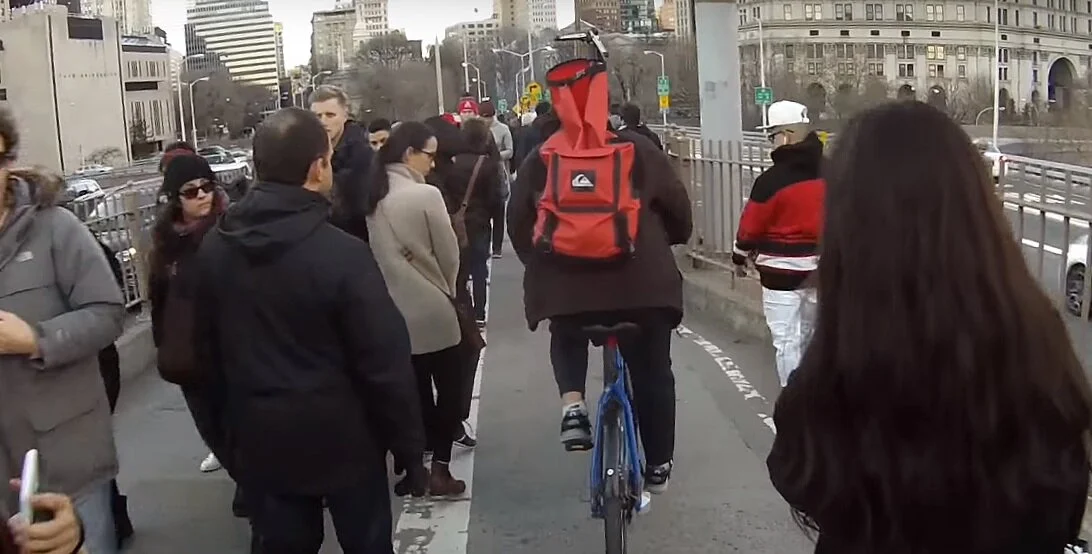
Noam Osband bikes across the Brooklyn Bridge (PHoto courtesy Noam Osband)

Noam Osband bikes across the Brooklyn Bridge (PHoto courtesy Noam Osband)


“There’s something so meaningful about the fact the friendliest way to cross the bridge is also the most effective. It feels like a Biblical parable, a reward for kindness.”

— Noam Osband


New York City isn't known for being bike friendly. The streets are busy, drivers are impatient, and pedestrians often clog the bike lanes. So if you're a cyclist, it often seems like shouting is the only way to get anywhere.

But several years ago, something happened on the Brooklyn Bridge that changed the way a man named Noam Osband thinks about biking in the city. His story explores how we communicate with strangers — and how to get what you want, the friendly way.


Also on this episode…

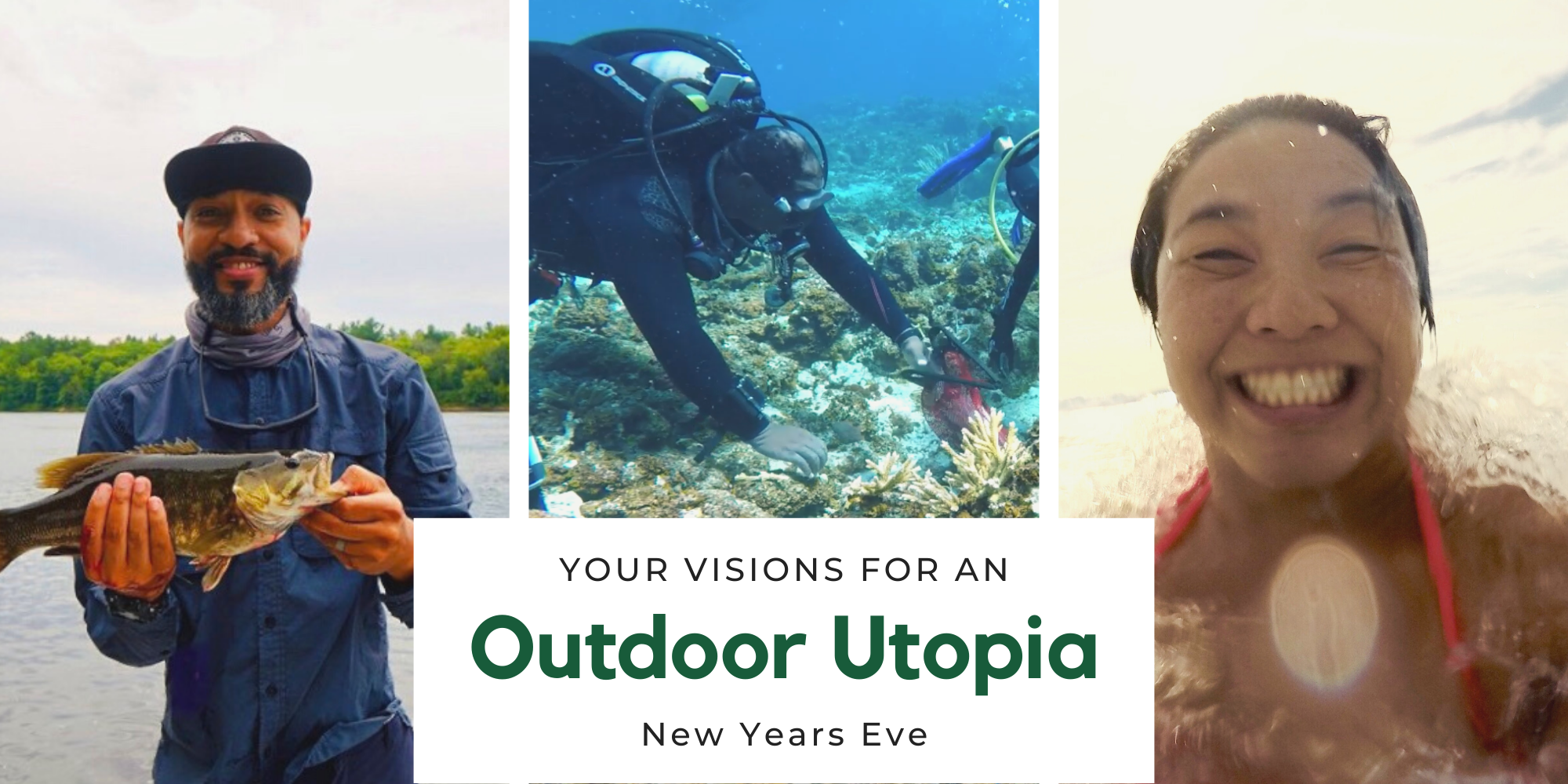
From left to right, Out There ambassador Ashley white, marine biologist Colin Howe, and Out There ambassador TIffany Duong

From left to right, Out There ambassador Ashley white, marine biologist Colin Howe, and Out There ambassador TIffany Duong


“It is a space of psychological and physical safety, for all.”

— Ashley White


Earlier this month, we invited you to share your vision of an outdoor utopia.

We wanted to hear your ideas for a more perfect world: what would the outdoors look like? How would you feel? How would that be different from now?

Your responses surprised us.

A few of you dreamed up a true utopia — an imaginary place where everything is idyllic. But a lot of you described places that actually exist. Places you love. Places you long to return to.

At the end of this episode, we share some of our favorite moments from the voice messages you sent.


Subscribe to Out There on Apple Podcasts, Spotify, Stitcher, or wherever you stream podcasts.

The voices on the Outdoor Utopia montage are: Britany Greenwalt, founder of The 11th Essential, Out There ambassadors Tiffany Duong and Ashley White, nature illustrator Rosalie Haizlett, marine biologist Colin Howe, and naturalist Francis Mendoza.

Special thanks to Cara Schaefer and Sheeba Joseph for their assistance with the Outdoor Utopia project.


This episode sponsored by


Better Than Fun

How a lonely time can offer emotional healing

Willow Belden on a solo trip to Utah (photo by Willow Belden)

Willow Belden on a solo trip to Utah (photo by Willow Belden)


“I’ve always been a closet introvert and cherished ‘me time.’ But I also felt lonely. With no parents and no significant other, I was keenly aware that I wasn’t a priority — for anyone.”

— Willow Belden


This year has been a time of profound isolation. Many of us are alone for the holidays, without our families, at a time when connections are sorely needed.

But, hard as it may seem, being alone is not always bad.

This episode takes place in the desert in Utah back in 2015, and it explores how something that initially seemed sad and lonely turned out to be an emotional victory.


Subscribe to Out There on Apple Podcasts, Spotify, Stitcher, or wherever you stream podcasts.


This episode sponsored by


Back to the Real World

Returning home after a life-changing thru-hike

Paul Barach hiked the Pacific Crest Trail in 2017. (Photo courtesy Paul Barach)

Paul Barach hiked the Pacific Crest Trail in 2017. (Photo courtesy Paul Barach)


“I’d spent 163 days unwrapping this incredible gift, now there was that hollow feeling you get on Christmas evening, surrounded by empty boxes.”

— Paul Barach


Grand adventures often change us. They help us process complicated emotions and work through our problems. We emerge happier, more at peace with the world.

But what if the forward progress is temporary? What if all the good vibes end, when you return to the “real world”?

On this episode, Paul Barach shares the story of his Pacific Crest Trail thru-hike, and explores the difficult process of going home to a life that looks bleak and broken.


Subscribe to Out There on Apple Podcasts, Spotify, Stitcher, or wherever you stream podcasts.


This episode sponsored by


After Getting Sober

Redefining yourself after losing the thing you loved most

Photo courtesy Brendan Leonard

Photo courtesy Brendan Leonard


“You’re in this moment where you cannot think about anything else. You have this extreme focus. … And I had not felt that mental relaxation, where my brain stopped and only focused on one thing, since I was drinking.”

— Brendan Leonard


Fresh out of college, Brendan Leonard suffered from alcohol addiction. 

He got sober, but drinking had been his favorite thing. It was what defined him. After alcohol was taken away from him, he didn't know who he was anymore.

On this episode, he joins me to talk about the difficult process of creating a new life for himself. For Brendan, that new life came about through rock climbing. And it happened completely by accident.


Subscribe to Out There on Apple Podcasts, Spotify, Stitcher, or wherever you stream podcasts.


Get featured on our New Years episode

As we head into 2021, we’re taking a moment to look ahead and envision a more perfect world. A more perfect outdoors. And we want to hear from you.

Click the link below to send us a voice memo describing your outdoor utopia. How do you feel in it? How is it different from now?

If you send us your input by Dec. 16, we might air part (or all) of it on the show!


Discounts from our sponsors


For 25% off your Thrive order and a free month-long membership, click here.

For 10% off your first month of counseling with Better Help, click here.


Passing

The weight of our exchanges with strangers on the trail

Barbara Jensen is an avid hiker (photo courtesy Barbara Jensen)

Barbara Jensen is an avid hiker (photo courtesy Barbara Jensen)


“Not only am I never recognized for the man I am, I'm then also disrespected as the woman I appear to be.”

— Barbara Jensen


When we pass people on the trail, we often exchange quick greetings — simple exchanges that recognize our fellow hikers and show that we are no threat.

But sometimes — whether intentionally or not — the words we share with strangers in the wilderness end up being hurtful, or invasive. Sometimes, these exchanges exacerbate frustrations and wounds created by a lifetime of discrimination.

On this episode, Barbara Jensen shares their experience as a gender-neutral hiker, and invites us to adopt a new trail etiquette.


Subscribe to Out There on Apple Podcasts, Spotify, Stitcher, or wherever you stream podcasts.


Support Out There

There are several convenient ways to give:

If you prefer to mail us a check, please make it payable to Out There and mail to PO Box 2331, Laramie, WY 82073.


Discounts from our sponsors


For 15% off your Kula Cloth order, enter promo code “OUTTHERE2” at checkout.

For 10% off your first month of counseling with Better Help, click here.


Changemakers

We’re working to make the outdoors more inclusive; here’s how you can help

Giving Tuesday Horizontal.png
 

“I want to create safe spaces outdoors. I want people to feel comfortable and un-triggered.”

— Mercy M’fon Shammah


Out There is working to shift the definition of “outdoorsy.”

We believe you don’t have to be athletic, able-bodied, or cisgender to be outdoorsy. You don’t have to wear high-tech clothing or use fancy gear. You don’t have to summit mountains or paddle raging rivers. And you don’t have to be white.

We’re working to rewrite the narrative through the stories we tell and the guests we invite on the show. And this week, we’re doing something additional.

Giving Tuesday Globe

Dec. 1 is Giving Tuesday, and we’re raising money.

Twenty percent of the money we raise this week will be donated to Wild Diversity, an organization dedicated to making the outdoors safe and welcoming to all.

Wild Diversity facilitates outdoor adventures, workshops, and education, with the goal of creating a sense of belonging in the outdoors for the BIPOC and LGBTQ communities.

The rest of the money we raise this week will support individuals who are helping change the narrative.

Out There is an independent production, and we operate on a shoestring budget.

Society often glorifies projects that are labors of love. But when a podcast is a labor of love, it excludes a lot of people from participating. If you can’t pay competitive wages, not everyone can afford to come on board, no matter how valuable the experience they gain.

This isn’t just true for Out There; it’s true for the media industry as a whole. It’s a broken system, and as a small, underfunded production, we find ourselves constantly grappling with how to avoid being a part of the problem.

We want to do our best to be a part of the solution, not the problem. So we’re coming to you today with a heartfelt request.

If Out There brightens your day, and if you want to help make the show truly accessible to all, please make a contribution today.

Eighty percent of your gift will go toward paying our staff and future interns better. And 20 percent will go to Wild Diversity, to support their work in making the outdoors more inclusive.

You can make a donation in any amount; no gift is too small.

If you’re already supporting Out There on Patreon, THANKYOU! If you’re able to make an additional one-time donation this week, you’ll be doing even more to support fairness in the workplace and in nature.

 
GT_logo_0.png
 

There are several convenient ways to give…

If you prefer to mail us a check, please make it payable to Out There and mail to PO Box 2331, Laramie, WY 82073.


A Conversation with Wild Diversity’s Founder

On this bonus episode, we talk with Mercy M’fon Shammah, the founder and executive director of Wild Diversity. We hear about her vision for the organization, her dream of creating a world in which groups like Wild Diversity are no longer necessary, and her efforts to make the outdoors safe and welcoming for all. Plus: how YOU can help!

Subscribe to Out There on Apple Podcasts, Spotify, Stitcher, or wherever you stream podcasts.

The Motherload

Should you leave your family behind to embark on a solo thru-hike?

BECKY JENSEN ON THE COLORADO TRAIL. (PHOTO COURTESY BECKY JENSEN)

BECKY JENSEN ON THE COLORADO TRAIL. (PHOTO COURTESY BECKY JENSEN)


“If a day hike was like a short therapy session, then a 500-mile hike was like long-term rehab. And that’s exactly what I needed.”

— Becky Jensen


Becky Jensen had a lot of things going for her: sweet kids, a caring fiancé, a promising career. But deep down, she wasn't happy. So a few years ago, she left everything (and everyone) behind to thru-hike the Colorado Trail. By herself.

On this episode, she shares her story. It's a story about relationships — both with your family, and with yourself. And it's about the surprising things that can happen to those relationships when you do something selfish — something just for you.


Subscribe to Out There on Apple Podcasts, Spotify, Stitcher, or wherever you stream podcasts.


Hear more stories from Becky Jensen


Discounts from our sponsors


For 15% off your Kula Cloth order, enter the promo code “OUTTHERE2” at checkout.

For 10% off your first month of counseling at Better Help, click here.


Conservation 2.0

Inspiration (and warnings) from Theodore Roosevelt’s radical environmentalism

Theodore Roosevelt in Yosemite (photo courtesy David Gessner)

Theodore Roosevelt in Yosemite (photo courtesy David Gessner)


“Roosevelt created the rough draft. And there are flaws in that draft. … We can take the best parts of that old ideal and use them in a new way that’s more inclusive.”

— David Gessner


In 1903, President Theodore Roosevelt stood on the rim of the Grand Canyon and called for the area to be protected.

“Leave it as it is,” he said. “You cannot improve on it.”

Roosevelt went on to preserve an unprecedented 230 million acres of American land.

Our guest on this episode is David Gessner, author of the book Leave It As It Is: A Journey Through Theodore Roosevelt’s American Wilderness. The book explores Roosevelt’s radical efforts to save wild places, while also condemning the dark reality that many of his environmental achievements came at the expense of indigenous communities.

On this episode, we discuss how we can learn from the accomplishments and atrocities of Roosevelt’s era to create a new environmentalism that is not only good for the planet, but also inclusive and just.


Subscribe to Out There on Apple Podcasts, Spotify, Stitcher, or wherever you stream podcasts.


Thankyou to our sponsors


For 10% off your first month of counseling with Better Help, click here.


An Unlikely Family

What if you decided to study wild animals by joining their herd?

Joe Hutto spent years embedding himself with a herd of mule deer in Wyoming (photo courtesy Joe Hutto)

Joe Hutto spent years embedding himself with a herd of mule deer in Wyoming (photo courtesy Joe Hutto)


“You don’t need to fear affection … and falling in love with an animal. That’s not going to blind you.”

— Joe Hutto


We often assume that scientists are not supposed to fall in love with their research subjects. They’re supposed to remain objective — to keep their feelings and emotions out of their work.

Wildlife researcher Joe Hutto did exactly the opposite. Over a decade ago, he embedded himself with a herd of deer in Wyoming. He figured the best way to understand an animal was essentially to become one of them.

This is the story of how he did that. It’s a story of love, curiosity, and sadness. And it’s about what happens when the line between fact and feeling becomes blurred.


Subscribe to Out There on Apple Podcasts, Spotify, Stitcher, or wherever you stream podcasts.


To hear more about Joe Hutto’s experience living with the deer, check out his book, Touching the Wild.


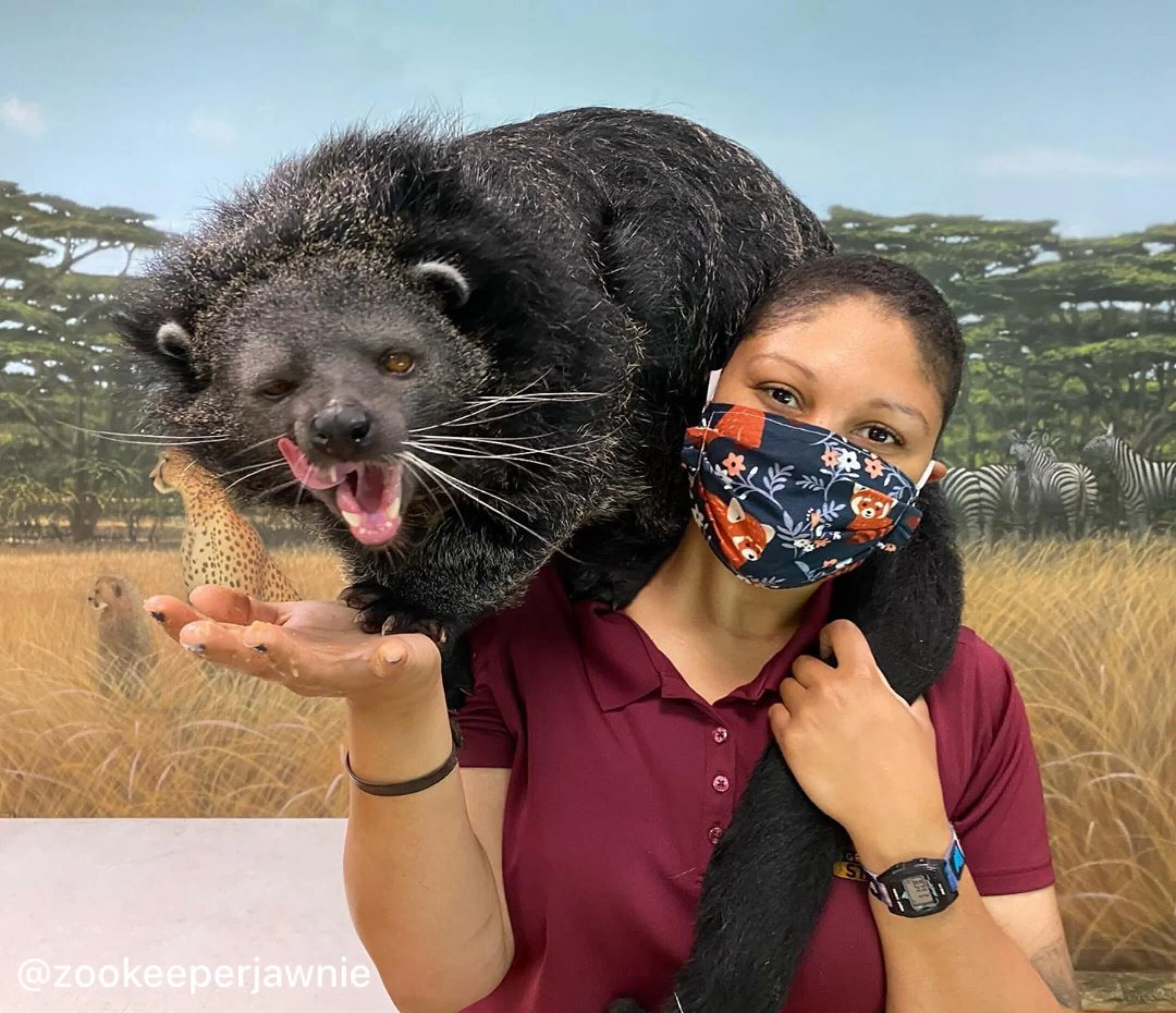
Jawnie Payne

The Tuesday Spotlight

On Nov. 24, we’ll be launching a new series on our blog and social media, called the Tuesday Spotlight.

The series will highlight people and organizations you might otherwise not hear about, but who are engaging with the outdoors in fascinating and thought-provoking ways.

Listen to “An Unlikely Family” for a sneak peak at the new project. And make sure to follow us on Facebook or Instagram to see the profiles as soon as they’re released.

(Photo courtesy Jawnie Payne, Nashville Zookeeper)


Thankyou to our sponsors


For 10% off your first month of counseling with Better Help, click here.


Out of the Shadows


Erin Parisi is changing the narrative about trans people, one mountaintop at a time

 
Erin Parisi Horizontal.jpg
 

“The narrative that we always see … is trans death and trans violence and trans discrimination. I decided I would change that narrative.”

— Erin Parisi


Growing up, Erin Parisi knew she was a girl. But the body she was born with didn’t match. And growing up in a small town, she didn’t feel safe telling anyone her secret.

It wasn’t until decades later that she finally mustered the courage to come out and transition.

But for Erin, manifesting as a woman wasn’t enough; she recognized that for all her struggles, she had racial and socioeconomic privileges that not all trans people had. And she wanted to leverage those privileges to make a big, bold, trans-positive statement.

So she set out to do something that would make history: climb the Seven Summits.

On this episode, we bring you Erin’s story. It’s a story about hiding, and not hiding. About taking a leap of faith and risking everything. And about trying to show the world that trans people belong (both literally and metaphorically) on the world’s highest mountains.

Natalia Lutterman brings us Erin’s story.


Subscribe to Out There on Apple Podcasts, Spotify, Stitcher, or wherever you stream podcasts.


To learn more about Erin Parisi and her Seven Summit bid, check out transending7.org.


Thank you to our sponsors

For 25% off your order and a FREE month-long trial, click here.

TAPP Logo.jpg

For 10% off your first month of counseling, click here.
Mr. Fabulous


A conversation with the metrosexual Black thru-hiker who fell in love with the A.T.

 
Derick Lugo finishes his Appalachian Trail thru-hike on the summit of Mt. Katahdin (Photo courtesy Derick Lugo)

Derick Lugo finishes his Appalachian Trail thru-hike on the summit of Mt. Katahdin (Photo courtesy Derick Lugo)


“Fear is the biggest enemy for goals.”

— Derick Lugo


Derick Lugo was not a typical thru-hiker.

A suave, manicured New Yorker, he wasn’t into hiking and had never been camping. But one day, he decided to challenge himself by doing the Appalachian Trail.

Derick’s memoir, The Unlikely Thru-Hiker, is a delightfully cheerful account of his journey, and on this episode, he joins us to talk about it.

We discuss the warm welcome Derick received on the A.T. as a hiker of color; we talk about how the generosity he experienced on the trail shifted his habits back home; and we share the highly entertaining story behind his trail name. Plus: why you shouldn’t fear stepping outside your comfort zone.


Listen to the episode below, on Apple Podcasts, on Spotify, on Stitcher, or wherever you stream podcasts.


Unlikely Book Cover.jpg

Want to read Derick’s memoir?


Discounts from our Sponsors

Kula Cloth.png

For 15% off your Kula Cloth order, enter the promo code “OUTTHERE2” at checkout.

Better Help

For 10% off your first month of counseling with Better Help, click the button below.

A Series of Unlikely Events

What if a fairytale romance could actually work out?

 
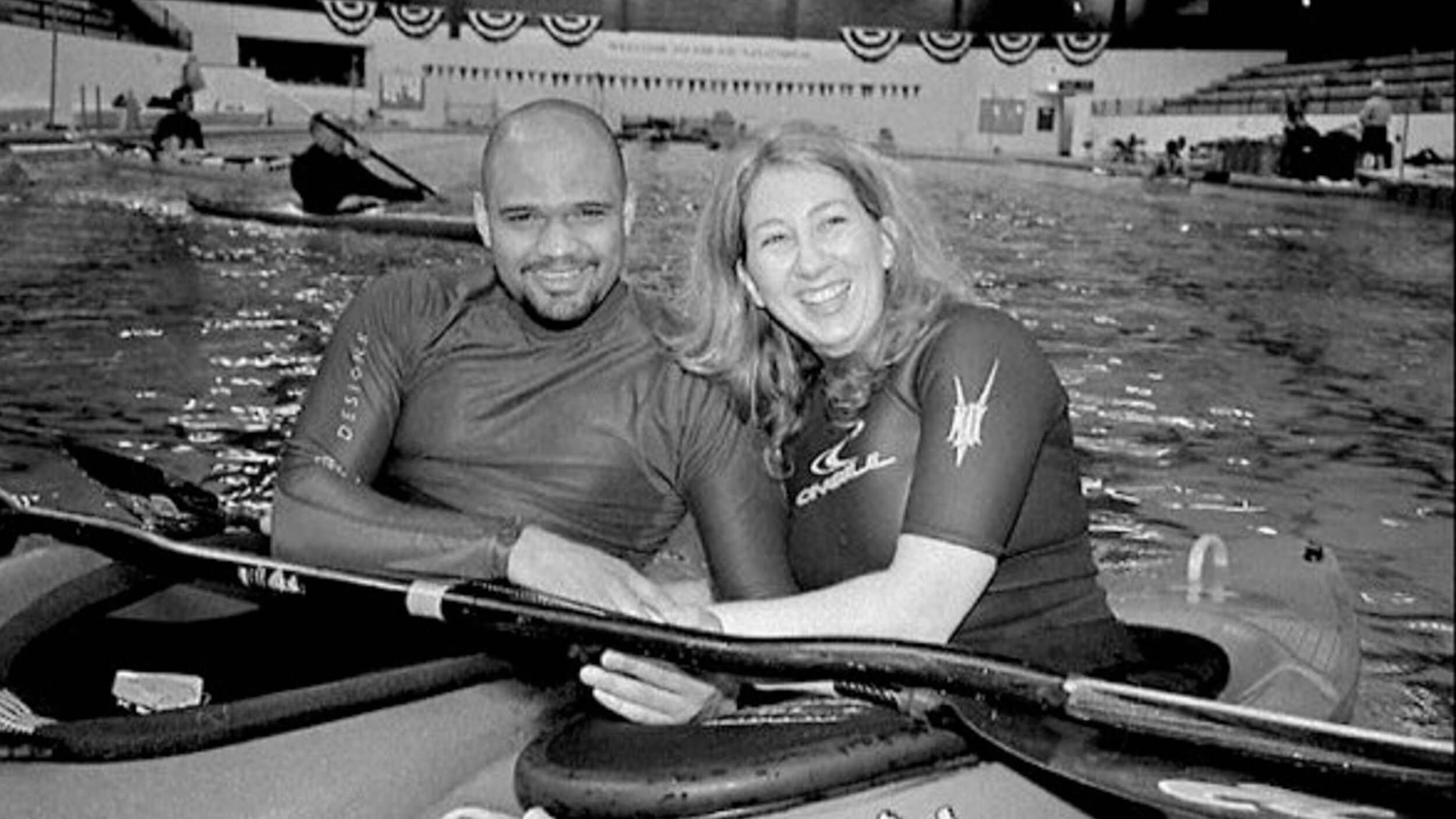
Walt House and Donna Martino (Photo courtesy Walt House and Donna Martino)

Walt House and Donna Martino (Photo courtesy Walt House and Donna Martino)


“I hate to sound sappy, but if this was meant to be — if he was my soulmate — then I owed it to myself to take this chance.”

— Donna Martino


In 2001, Donna Martino stuck a photograph on her fridge.

Photo from the Chicago TRibune

Photo from the Chicago TRibune

It was a picture from the newspaper of a handsome kayaker paddling through the surf.

A few months later, Donna matched with the man on a dating website.

The rest is history.

We tend to assume that improbable beginnings are a recipe for disaster — that sappy romances can’t last — that fairytale endings are only for movies.

But sometimes, the real world serves up a dose of schmaltz.

This story is about what happens when coincidences pile up, and strangers go out on a limb and take a chance on each other.


Discounts from our sponsors

Better Help Square.png

For 10% off your first month of counseling, click here.
Kula Cloth

For 15% off your Kula Cloth order, enter the promo code “OUTTHERE2” at checkout.